 Beautiful, absolutely beautiful. Cinema Paradiso is perfection and the best world of foreign cinema has offered. The film that defines the power of cinema the best, this is a revelation and after many years, I will still consider it to be one of the two greatest films of all-time (along with Chaplin's Modern Times). Giuseppe Tornatore's direction and screenplay is an inspiration, with its charm, humour and beauty. Every cast member delivers an impressive performance, giving it their best and adding to the wonderment of the film. Then, there's Ennio Morricone's brilliant score. His best work to date, the music of Cinema Paradiso is an emotional tour-de-force hitting the right keys and producing a melody that will remembered for all eternity. As the film goes through the three major time periods of the protagonist's life, we are immersed all throughout by how the art of film touched and helped mold this boy's life. And then comes the touching final twenty minutes, that are sure to bring a tear to just about everyone who watches it. It's a commentary on how the cinema has unfortunately fallen in this technology-filled time period, but the films still stay the same, enchanting us through our whole lifetime. All this leads up to one of the greatest film endings ever made: a montage of screen kisses, set to Morricone's classic score, a heart-breaking moment that will certainly bring forth many good memories to all viewers. If I were to make a selection of films to show at a classic film festivals, I would proudly give Cinema Paradiso the honour of being the closing night film.
Monday, December 24, 2007
The magic of Cinema Paradiso (1989)
Beautiful, absolutely beautiful. Cinema Paradiso is perfection and the best world of foreign cinema has offered. The film that defines the power of cinema the best, this is a revelation and after many years, I will still consider it to be one of the two greatest films of all-time (along with Chaplin's Modern Times). Giuseppe Tornatore's direction and screenplay is an inspiration, with its charm, humour and beauty. Every cast member delivers an impressive performance, giving it their best and adding to the wonderment of the film. Then, there's Ennio Morricone's brilliant score. His best work to date, the music of Cinema Paradiso is an emotional tour-de-force hitting the right keys and producing a melody that will remembered for all eternity. As the film goes through the three major time periods of the protagonist's life, we are immersed all throughout by how the art of film touched and helped mold this boy's life. And then comes the touching final twenty minutes, that are sure to bring a tear to just about everyone who watches it. It's a commentary on how the cinema has unfortunately fallen in this technology-filled time period, but the films still stay the same, enchanting us through our whole lifetime. All this leads up to one of the greatest film endings ever made: a montage of screen kisses, set to Morricone's classic score, a heart-breaking moment that will certainly bring forth many good memories to all viewers. If I were to make a selection of films to show at a classic film festivals, I would proudly give Cinema Paradiso the honour of being the closing night film.

Sunday, December 23, 2007
Sweeney Todd: The Demon Barber of Fleet Street (Tim Burton, 2007)
Sweeney Todd: The Demon Barber of Fleet Street
 As per typical of Tim Burton, this film is a visual triumph, succeeding incredibly well in art direction, costumes, cinematography and makeup. The German Expressionism influences are obvious and that's what makes this film even more fun, as it's a German Expressionist film set to music. Having never heard much of Stephen Sondheim's work, I didn't know what to expect from the songs, but I must say I was impressed. Some memorable tunes and funny lyrics add to the fun of the film, particularly when Helena Bonham Carter sings them.
Regarding the actors, Johnny Depp is very good, although I did catch a hint of Jack Sparrow sometimes. He's a decent singer too, but nothing extraordinary. Helena Bonham Carter was my favourite in the cast, playing her character incredibly. She's a tragic figure, who you can't help but sympathise for and Carter's performance adds to this. She's a great singer as well. Alan Rickman, as usual, is fantastic despite nothing having that much screen time. He has a fairly good singing voice, too. Timothy Spall and Sacha Baron Cohen provide plenty of dark comic relief in their parts, too. I didn't particularly care for the two actors playing Joanna and Anthony, though. Despite good singing, I found them rather uninteresting.
The film gets off to a slow start, but once the killings start (and boy does Burton do a great job with those), it gets more exciting. Those two hours passed by very quickly. My favourite musical of the year (but I still need to see Across the Universe).
The embarassment that is the Super Mario Bros film
 "Wasted opportunity" is the phrase that instantly comes to mind, when one thinks of the immense failure of the Super Mario Bros. film adaptation of the classic video game. One of the most popular games on the Nintendo console, The Super Mario Brothers series is a fun way to pass a couple of hours. The story of the game is simple: a plumber must save the Princess from the evil overlord of her kingdom. Granted, it's not a particularly intellectual plot, but it's one that has been used very successfully many times before, from Robin Hood to Star Wars. With a talented screenwriter and some good direction, a Super Mario movie could have been a fun romp for children, teenagers and adults as well. Unfortunately, the film hoisted upon fans in 1993 was far from a good film. Super Mario Bros. is a gigantic piece of un-recycled product that is not deserving of the title given to it. The fact that it was produced by the man responsible for The Killing Fields and starred a talented group of award-winning actors makes this more embarrassing for not only them, but also us having to watch them make a fool of themselves.
The plot of Super Mario Bros. is such an incoherent mess, it's as if they took the three drafts of the screenwriters and just mixed them up into one big pile. Mario Mario (Bob Hoskins) and Luigi Mario (John Leguizamo) are two brothers (or are they father and son, as the film isn't particularly clear on that) who run a plumbing business, which isn't exactly the most successful. One day, Luigi meets Daisy (Samantha Mathis), an archaeologist and he falls in love with her. When she is kidnapped by the henchmen of the evil King Koopa (Dennis Hopper), Mario and Luigi go off to save her. They land in a mysterious big city hidden underneath New York City, populated by dinosaurs that have evolved into human beings. Soon, they find out that Koopa wants the rock around Daisy's neck so that he can go up to the surface and rule over the Big Apple. Now, it's up to the Super Mario Brothers to save the day.
To start off, the biggest problem with Super Mario Bros. is the fact it is absolutely nothing like the video game. The plot of the game, while simplistic, still works. The story that the film brings forth throws everything away and substitutes it for the ridiculous mess described in the previous paragraph. In fact, the only things that the film has in common with the game are the character names and the title. An adaptation does not necessarily have to be faithful to the source material, but taking away what made the original story work will certainly make the final version smell like rotten waste disposal, for both fans and general filmgoers. The screenplay is filled with jokes that aren't funny, action scenes that are just boring and characters with minimal character development. When a 16-bit video game excels better in all of the above listed aspects, there is definitely something wrong with the film version.
The film also fails on a visual level. Super Mario Bros. is a dark film that while marketed for children, it definitely does not feel like it was intended for them. The sets are particularly disappointed, seeing as they could have saved the film. A Manhattan version of the Mushroom Kingdom sounds like a promising idea, but the filmmakers once again ruin the opportunity to bring something good to the proceedings. Super Mario Bros. looks as if they stole the set from Blade Runner and sneezed all over it. It's enough that they practically copy the style, but they essentially rip out what made that film look sleek. If Rick Deckard showed up in that city, he would have had a heart attack at what the set designers had done. The special effects also fall into the category of "poor." What makes that aspect of the film really bad is that despite being a Hollywood film on a big budget, the effects look like those of B-movies from the 1960's.
Finally, the final aspect of Super Mario Bros. that could have saved it also fails. Bob Hoskins puts on the same accent he did for his character in Who Framed Roger Rabbit. Unfortunately, the superb work he brought to the screen in that film doesn't surface here. He just looks bored, wanting to leave the set immediately so he can go to the bank and cash his paycheque. I think I even saw one scene where he breaks character and glances at his watch. John Leguizamo doesn't fare much better as he's given the film's most banal and uninteresting character as well as dialogue. Through most of the film, he's just staring off into space. The same goes for Samantha Mathis, who is just dull. The actor in the film I feel the most sorry for is Dennis Hopper, though. Not only is the "comedic" material he is provided with not that funny, he also hams it to the max in his performance. He puts on different voices from a Baltimore accent to a Donald Trump impression and all seem to fail badly. You haven't seen the Easy Rider star until you watch him gleefully say "Monkey!" like a five year old. Or better yet, don't!
Roger Ebert has taken on some recent controversy for publicly stating that video games are not art. This isn't a discussion I want to get into the middle of right now, but comparing the joys of pressing those colourful buttons to the horrific experience of watching this film, I have to side with the game enthusiasts on this one.
The infamous "Monkey!" line, spoken by Dennis Hopper in the film.
Friday, December 21, 2007
A great adventure story: Jurassic Park (1993)
 Sure, the acting isn't perfect (except for Jeff Goldblum) and there are some un-interesting stretches when there isn't any dino action, but Jurassic Park certainly is a bucket-load of fun. Steven Spielberg's direction is splendid as usual, as he brings both warmth, adventure and terror to the film. The special effects are brilliant and still some of the best ever done for a film, with the change from CGI dinosaurs to robotic ones being seamless. The action scenes are very well done too and despite the flaws of the film, Jurassic Park is still very re-watchable.
I also noticed on this viewing that the scene with the Raptors in the kitchen is very similar to the part in The Shining when Jack is chasing Danny around the Overlook Hotel's kitchen. Considering The Shining is one of Spielberg's favourite films, this homage wouldn't surprise me (and Kubrick was a fan of Jurassic Park, himself).
Monday, December 17, 2007
A perfect animated musical production: Beauty and the Beast (1991)
 It has been said that the pen is mightier than the sword, but when this age-old phrase is converted to modern times, it translates to "the desktop is mightier than the pencil." There's no denying that the computer has become a tool used across the world, whether for political reasons, or for business or especially for educational purposes. Computers have also been adopted by the film industry to give their works of art a shinier feel and along with the visual effects wizards, the filmmakers who use these electronic devices the most are the animators. After a while, it was uncertain whether the cel-based animation used to create such classics like The Little Mermaid and Pinocchio would be completely dropped in favour of the quicker and slicker style. While studios like DreamWorks may have given up on them, the folks at the world's pioneering animation studio are still behind the pencil-and-paper animation that has enchanted families for generations. Looking back at one of their essential works, Beauty and the Beast brings back memories of not only nostalgia, but also warmth. Quite possibly the greatest love story ever told, this "tale as old as time" has always been told by bringing pen to paper. From its candle-lit beginnings by a French writer many years ago to the Disney animators who brought joys to people of all ages, Beauty and the Beast has always touched the heart.
Belle is a smart and independent girl living in a small French town, who despite her beauty, is looked down upon by the other citizens. Only Gaston, the town's ladies man, has any interest in her and will stop at nothing to receive her hand in marriage. When Belle's father rides off to compete in the state fair, he gets lost and finds himself in a mysterious castle, populated by moving and talking objects. Despite a warm welcome, he soon finds himself under the imprisonment of the beast who rules over the castle. Coming to her father's rescue, Belle decides to take his place and stay in the castle. The Beast and the objects finally see this as a chance to break the spell that was cast over them years ago, in which the only way it can be broken is if the beast learns to love and be loved in return. At first, the chances are slim, but Belle then begins to notice the beast's sweet side and thus a friendship commences.
The main part of what makes Beauty and the Beast such a brilliant film is the fact that the relationship between the two title characters doesn't feel artificial or one-dimensional, even though they're drawn on paper. Unlike other famous fairy tales, Beauty and the Beast feels quite realistic in its definition of love. The story breaks all conventions by not going the "love at first sight" route and letting the romance progress at a reasonable pace. Belle also proves to be the most interesting Disney heroine, as she doesn't fit the norm of typical princesses like Snow White and Sleeping Beauty. Unlike the aforementioned characters, Belle is not bland, but actually as a personality. She defines individuality and seeks to do more than just marry a prince. Her annoyance at Gaston is not only humourous, but also shows that her ideas of romance don't consist of "a rustic hunting lodge... my latest kill roasting on the fire... and my little wife, massaging my feet... while the little ones play on the floor with the dogs... we'll have six or seven," as Gaston puts it. The Beast is also a rather stubborn, but loving personality. Despite his tough exterior is a nice person at heart which Belle begins to realise the more into the relationship they enter.
Adding to the brilliance of the chemistry between Beauty and the Beast are the songs from Alan Menken and the late Howard Ashman. Although both did terrific work on The Little Mermaid and their cult musical Little Shop of Horrors, the music in Beauty and the Beast stands as their best. The title theme song is quite possibly one of the most romantic songs ever written, combining beautiful lyrics with a very memorable melody. This song enhances the film's famous ballroom scene to ever impressive heights, already helped by the breathtaking animation in the sequence. "Beauty and the Beast" was not written as just a way to sell soundtracks and win Oscars. It adds another dimension to the characters as they continue to fall deeply in love with each other. It is both moving and deep. The other songs provided by the team also contribute wonderfully to the film, from a show-stopping Broadway number called "Be Our Guest" to the very funny ode to "Gaston." They're bursting with energy and humour made even more poignant by the fact they would feature the last lyrics written by Ashman (who had also already contributed some work to Aladdin). It's a brilliant way to end his career and the end credits homage him perfectly: "To our friend, Howard, who gave a mermaid her voice and a beast his soul, we will be forever grateful. Howard Ashman (1950-1991)"
Probably one of the most important ingredients that make Beauty and the Beast such a success is the startling animation. The animators at Disney did a terrific job at making everything absolutely perfect, from the character designs to the sets. Each character has their feel, whether comedic or dramatic, and the animators allow them to breath, seamlessly combining the actor's voice to the moving drawings. The sets are also worthy of mention, particularly the look of the Beast's castle. The gothic castle is drawn and painted beautifully from top to behind, so much so you're forgetting you're watching an animated film. The film is bright and colourful, but also dark and dreary when necessary. As mentioned before, the ballroom sequence combines Menken and Ashman's music with the animation flawlessly, giving a completely magical feel to it. When computers are brought into the scene, it seams in perfectly, not feeling distracted in the least. Beauty and the Beast most certainly stands as Disney animation at its finest.
Some of the best animated films in the world have come from the Walt Disney studios and Beauty and the Beast is deservedly one of their crown jewels. At the film's release, it was honoured with an Oscar nomination for Best Picture, a rare feat for an animated film. It proves that like its heroine, Beauty and the Beast steps out of the comfort zone and thus it succeeds magically in taking people off into their hearts and children within.An example of the "beauty"...
Wednesday, December 12, 2007
DVD Review: Eyes Wide Shut (1999) - Two Disc Special Edition
 Warning: The following review of Eyes Wide Shut contains spoilers for the film.
Stanley Kubrick began his career as a teenage photographer and finished it as a maverick filmmaker. The transition from a young Brooklyn kid to one of the greatest directors in the history of film is an impressive one and rather evident in plenty of his films. Kubrick always knew how to frame a shot, ever since he began taking pictures as a boy. In each of his films, the camera was placed perfectly, creating superb picture after picture. Kubrick was not just a filmmaker, he was an artist. Many years from now, his films will be looked at the same way the paint strokes of Goya or the music of Mozart are analysed today. To cap off his incredibly consistent career, the reclusive Kubrick made his first film in twelve years and one of his best. Eyes Wide Shut is a film that is hard to classify into one genre, as its unique cinematic experience brings something different never experienced before. Kubrick would continually re-invent film with such masterpieces like Dr. Strangelove, A Clockwork Orange and most importantly 2001: A Space Odyssey, his magnum opus. Eyes Wide Shut may unfortunately be Kubrick's final film, but thankfully he left the world with a bang and not a whimper.
Bill Harford (Tom Cruise) is a New York doctor whose night of drugged sex goes differently than planned when his wife Alice (Nicole Kidman) reveals that she almost had an affair. Filed with jealousy, he wanders through the city in a sexual odyssey. He encounters street thugs, a kindly prostitute and finally an old pianist friend, who reveals a little too much about his next recital. Moving down to the seedy underworld of the Illuminati, Harford finds himself in the middle of an orgy where the rich come to watch as young maidens de-flower themselves in front of everyone. After the scare of his life, the curious doctor decides to investigate the meaning behind the night's events and like the viewer, he is not sure whether or not he should believe what is given to him.
Like all of Stanley Kubrick's films, Eyes Wide Shut is a piece of work that gets better with multiple viewings and more is noticed with each look. Not surprisingly, there is still plenty left un-explained and like a detective story, the viewer has to unravel clues much like the main protagonist does. Yet, before Harford turns into Sherlock Holmes, he represents a modern version of Odysseus from Homer's The Odyssey. Throughout the film, he is confronted by individuals wishing to give him sexual pleasure, yet he avoids them much like Odysseus and his encounter with the sirens. Similar to that character, turning down the various characters turned out to be fortunate for him. During his dreamy walk through New York, Harford encounters a prostitute who he kisses but eventually does not sleep with. The next morning, he finds out that she is HIV-positive. His decision to not have sex with her turns out to be a good one as he does not receive the deadly disease. He also turns down the offer of a patient of his and despite his sexuality being questioned by a group of rowdy teenagers (thus leading to the encounter with the prostitute), he still does not cheat on his wife. Her words may have caused jealousy, yet he actually ends up being a more noble character than Alice. With Harford as his main protagonist, Kubrick actually brought upon a rare personality that for him was un-explored. Harford has his flaws, but he is actually the most sane character of the film and the least demonic. Tom Cruise's performance also helps the audience be with the character as goes on his journey. He gives life to Harford and fleshes him out into a human being with feelings and emotions. Cruise is an accomplished actor and he hits the right keys, not going over-the-top and not being too drone-like. It is a subtle performance from one of Hollywood's biggest stars.
Stanley Kubrick would always give his female leads as much as heart-ache as his lead male actors. Most of the time he managed to bring forth a great performance as evidenced by Marisa Berenson in Barry Lyndon and Sue Lyon in Lolita. In the case of Shelley Duvall in The Shining, there was the opposite effect. Thankfully, Nicole Kidman's work in Eyes Wide Shut proves to be an outstanding performance, bringing forth a character whose dark side is shown even when she's just glancing towards the camera (a frequent Kubrick trademark). Her character is not on screen as much as Cruise is, but when she does show up on camera, she excels. Most of Alice's dialogue consists of monologues, each showing the character's rough edges easily. Kidman perfectly brings layer upon layer on the character. Even in Harford's frequent fantasies, there is something sinister and careless told about her. The most fascinating scene of Kidman's comes when she is high on drugs and reveals her sensual theories to her husband. The combination of Cruise and Kidman starts the scene, but she soon takes over silencing not just Harford but the viewer as well.
Another possibly sinister character with something to hide is done very well with Sydney Pollack. As soon as he is shown in a bathroom with an over-dosed and naked girl, the audience knows that this man has a couple of skeletons in his closet. When he reveals to Harford some information regarding both the cult and the naked girl, both Harford and the viewer aren't quite sure whether to trust him or not. It's not just the screenplay that leads us to believe this, but Pollack's performance as well. That final scene either produces plenty of information or makes people more confused about the past two hours than they were before. He says the whole orgy cult was done to scare Harford, yet why would they go through all the trouble to do all that? Harford is suspicious and so are we.
Kubrick only follows that sequence up with a final confrontation between Bill and Alice. In these culminating scenes, Alice states that "only as sure as I am that the reality of one night, let alone that of a whole lifetime, can ever be the whole truth." All of this goes back to the film's title. Are Harford's eyes wide shut? Or could it be Alice or even the pianist? How about Sydney Pollack's character? For all we know, it could even be Kubrick himself as the director certainly did work in mysterious ways. It is rumoured that long-gone rapper Tupac hinted in his songs about his eventual death. Could it be that Kubrick wanted to give us one last hint about him in this film? It is possible that we will never know. Yet, he left behind a treasury of classics and Eyes Wide Shut most certainly ranks among his best.
Now, Eyes Wide Shut has finally gotten the two-disc special edition treatment it so rightfully deserves. The transfer is terrific and the collection of extras, both new and old, is great. The first extra, on Disc Two, is a documentary called The Last Movie: Stanley Kubrick and Eyes Wide Shut, which takes a look at Kubrick's final years, including the production of Eyes Wide Shut. It's an interesting featurette, although I would have liked to see more information on the title film. There's yet another featurette right afterwords that looks at the films that Kubrick almost made, most well known of which were his Napoleon and Holocaust projects. It's the best supplement on the set and does an interesting job at showing the way Kubrick worked. This is followed by his speech from when the famed filmmaker won the Honorary Director's Guild award shortly before his death. Kubrick never did many public filmed interviews, so this is a treat to watch.
Finally, the disc ends with some extras taken from the previous DVD release of the film. There is an interview gallery consisting of conversations from Cruise, Kidman and Kubrick's long-time friend, Steven Spielberg. Spielberg provides the most interesting discussion as he talks about the power of Kubrick's films as well as his friendship with the man. Cruise and Kidman also provide a couple of interesting comments, but it's mostly just praise (and since they were recorded before their divorce, their discussions are also rather dated). The last extras are a series of trailers for Eyes Wide Shut. Probably what will please all North American Kubrick fans is the first Region 1 release of the uncut version of Eyes Wide Shut, never before released in that part of the world. This is the way the film was intended to be seen and thankfully newcomers of the films will only be able to watch this version.
Stanley Kubrick's Eyes Wide Shut is a phenomenal motion picture and one that has incredibly re-watchability value as each viewing brings forth something new. Like Kubrick's other films, this is a art work and one that can be theorised for many years. This DVD is definitely worth adding to any collection.
Note: The film can also be purchased with the new Stanley Kubrick Directors Series box-set, which also has two-disc editions of 2001: A Space Odyssey, The Shining and A Clockwork Orange, as well as single discs of Full Metal Jacket and the documentary Stanley Kubrick: A Life in Pictures. If you're a Kubrick fan, the box-set is definitely worth getting, especially for its bargain price of about 60 to 80 dollars.
Saturday, December 8, 2007
South Park: Bigger Longer & Uncut (1999): smart, political satire
 In the twenty-first century, it appears the world has become more and more cowardly and thus entertainment has attempted to be more about being "politically incorrect" than providing worthwhile, honest entertainment. The biggest insult as of date has been the editing of the cartoons of yester-year, due to the smoking and racial depictions that were seen in those masterpieces. Animated series today lack the daring of those programmes and thus children are introduced to juvenile feel-goodery rather than the comic violence provided by the Looney Tunes. Even Sesame Street's Cookie Monster has been put on a diet, due to angry letters from parent's groups. The only cartoon out there that is not afraid to be blunt, satirical and downright naughty is South Park, the crudely animated adventures of four boys in a Colorado mountain town. Each week, creators Trey Parker and Matt Stone bring forth what can be referred to as a warped, politically-charged and happily vulgar version of Peanuts. Yet, looking beyond the construction paper animation and constant swearing, South Park proves to be a witty and funny blend of intelligent, take-no-prisoners humour and even some heart and sweetness thrown in as well. The feature film version of the animated series, appropriately and comically titled Bigger, Longer & Uncut, has a message which Parker and Stone manage to successfully swing it in along with a bunch of side-splitting funny sight gags, musical numbers and flatulence humour.
Kyle, Stan, Cartman and Kenny are excited about seeing their favourite Canadian actors Terrnace and Philip in their first big-screen film. When they are not allowed admittance into the R-rated "cartoon", they sneak in and thus are their vocabulary is afforded some colourful new words. Their potty mouths angers the parents of South Park and so they decide to wage war with Canada, blaming them for all of society's wrongs and soon Terrance and Philip themselves are arrested and put on death row for "corrupting American's youth." To save their heroes, the children of South Park start their own group. As in the series, Kenny dies and is sent to Hell, where he meets Satan and Saddam Hussein, who see the ongoing war as their chance to finally take over the world.
Free from the restraints of television, Parker and Stone are free to enter possibilities that have not been explored before in the series. Yet, they oddly decide to keep it low-key by centering on the four main boys. Kyle and Stan are the straight men and the eight-year-old altar egos of Matt and Trey. Simply put, they may be vulgar and the comments spewing out of their mouths may not be the most friendly, but they're likable and the characters the audience is most able to relate. Even the bigoted slimeball that is Cartman has a sweet side to him, as he is all for the fight against censorship. In a situation almost akin to A Clockwork Orange, once he has been forced to no longer swear, the audience is waiting for him to get his beloved powers back. And finally, there's Kenny the un-sung hero of the story. While his death is used by the parents as a way to exploit their cause, Kenny attempts to stop the war once he learns of Hussein's intentions. The South Park gang have been around for a decade now and yet it's this film that's them at their all-time best.
Plenty of what makes the film more than just a longer episode of the series is the way in which Trey Parker and Broadway composer Marc Shaiman turn Bigger, Longer & Uncut into a Disney-style musical. The songs are clever and creative and best of all, they help move the plot along and do not feel like they're just adding to the running time. The opening number "Mountain Town", a parody of Beauty and the Beast's beginning, fools the audience into believing that they're about to watch a feel-good family comedy by giving it a tone different from what appears after those first four minutes. After that, the music goes in all sorts of directions. The audience is treated to a profane and flatulence filled homage to Oklahoma!, a march declaring the evils of America's neighbour to the north, a song of admiration towards a figure skater and finally, a combination of the film's best tunes done in the style of Les Miserables. There is even a love ballad played during the end credits, spoofing the typical melodramatic songs that Oscar usually awards (and South Park would, not surprisingly, lose to). Parker understands the musical genre perfectly, as previously evidenced in his student film Cannibal! The Musical and Bigger, Longer & Uncut stands as one of the best the art of cinema has offered.
One of the most notable aspects of South Park, along with the humour, is the political satire. In Bigger, Longer & Uncut, Parker and Stone go up against their biggest enemy since going on the air: humourless parent's groups. Along with Stan and Kyle, the two foul-mouthed Colorodians are also represented by the two foul-mouthed Canadians Terrance and Philip. The two characters are not necessarily a parody of South Park, but more-so how easily offended parents view South Park: a badly animated cartoon filled with low brow toilet humour consisting of flatulence jokes and swear words. It may have all of those things, but if people judge it without actually watching it, it's hard to get behind them. If they actually view it, they will find that South Park is satirical and not after all targets, but only those who deserve it. If they actually become offended by what they see, at least they are shown as less intolerant due to actually giving it a chance. Another aspect of parent's groups that Bigger, Longer & Uncut so wonderfully shows is its ability to blame others for their own mistakes. South Park is not intended for children, yet they still manage to find a way to watch it. Instead of blaming Parker and Stone, they should sit down, switch off the television and talk to their children. Sending angry letters to networks and studios that don't read them or waging war with a country which is just providing innocent entertainment isn't going to do any good. Instead, these people are actually giving Parker and Stone more publicity and more targets to make fun of.
Then again, if it weren't for the parent's groups, there wouldn't be this marvelous film. Trey Parker and Matt Stone are the two most brave comedians in the television and film business and their magnum opus is the delightful, but meaningful Bigger, Longer & Uncut. This is not just an animated comedy. It's a musical, a message film and an attack on judgmental adults everywhere.Friday, December 7, 2007
Speed Racer - Trailer
I've never seen the original Speed Racer cartoon, nor was I ever fond of the The Matrix, yet there seems to be an odd charm about this film, although films about race cars are either hit (like Cars) or miss (Talladega Nights). The visuals look well done, yet I'm not sure how I will handle them for two hours, but it does have a good cast involved. I will have to wait for a longer trailer to get a full idea whether it's worth seeing or not.
Thursday, December 6, 2007
One of the greatest screen musicals: The Producers

When numerous incarnations of a famous story are created, it's easy for one version to get lost in the shuffle. For Mel Brooks's mega-phenomenon, The Producers, it appeared that the musical film version is that unfortunate casualty. Originally a film made in 1968 and starring Zero Mostel, The Producers was later adapted into an incredibly successful Broadway musical. For the film version based on his play, Brooks elected to assign Susan Stroman the directing job, just as he had done on stage. What was most often criticised about the film was that all Stroman had done was film the stage show. Yet, that is more a compliment than a complaint. The Broadway version of The Producers is one of the funniest and most refreshing stage musicals to date, bringing together some excellent and memorable songs, entertaining dance numbers and some witty lines that only Mel Brooks could write. The film version keeps all of the wonderfulness intact and thus the film succeeds incredibly well in producing not only the best film musical of this still young decade, but also one of the best musicals ever put to celluloid.
Max Bialystock (Nathan Lane), the former King of Broadway, is now producing flop after flop and now resorts to seducing little, old ladies to get finance. When his timid accountant, Leo Bloom (Matthew Broderick) discovers a way in which a producer could make more money with a failure, Bialystock partners with his new protege and they set out to find the worst play ever written. The disaster-piece they find is "Springtime for Hitler: A Gay Romp with Adolf and Eva at Bergesgarten", written by Nazi playwright Franz Liebkind (Will Ferrell). Hoping to add more controversy to the already burning, Max and Leo employ the incredibly flamboyant Roger De Bris (Gary Beach), the worst director in town to bring the "love letter to Hitler" to the stage. As Opening Night comes closer, Leo and Max also fall in love with their Swedish secretary/receptionist Ulla (Uma Thurman).
The style which Stroman and Brooks chose to make The Producers suits it perfectly, as it pays homage to the classical musicals like Singin' in the Rain and My Fair Lady, instead of opting for the quick-cutting MTV approach that musicals have adopted in recent years. Thus, the result is a bright and breezily shot musical utilising the old school lighting techniques and most of all Stroman's choreography to great effect. From old lady walkers in "Along Came Bialy" to the absolutely bombastic campy style of "Springtime for Hitler", the dance steps are superb and the viewer is able to watch every step without interruption. Each number is set up perfectly, not running too long and providing the film's most entertaining moments. Of course, the written dialogue provided by Mel Brooks and collaborator Thomas Meehan is as sharp and witty as what was seen in the original film. The actors say their lines with the most perfect comedic timing imaginable, naturally causing fits of laughter in the viewer.The humour ranges from slapstick routines to both obscure and well-known Broadway reference. Littered throughout, as well, are background gags like the posters seen in Max's office and an extra doing something silly behind the main actors. Naturally, the satire is also kept firmly in place, with Brooks and Stroman going after their usual targets: critical theatre patrons, boring accountants and of course, Adolf Hitler and his "hotsy, totsy Nazis."
The material and music is already perfect, so of course, they don't change it. However, critics have complained that the actors are over-the-top on the screen, thus producing a lot of mugging. Yet, that is the only possible way to perform Mel Brooks material as its scripts were practically made for mugging for the camera's attention. Naturally, Nathan Lane and Matthew Broderick are the stars of the film and hence they deserve the bulk of the credit for bringing their jokes completely to life. Nathan Lane is tremendous, invoking exactly what got him the Tony Award for the performance. Even though, Max is a slightly vindictive fellow, the audience can't help but feel sorry for him. Matthew Broderick also brings a certain heart to the film as Leo Bloom, going for a different approach than Gene Wilder. His Leo is a poor schmuck, who despite his panic attacks, views the world slightly more optimistically, with eyes and expressions full of wonderment and desire. Putting Lane and Broderick together was a stroke of genius on the part of Mel Brooks, as they both shine and as shown in one of the final songs, "Til Him", their chemistry is one of a kind. Somewhere out there, Zero Mostel is smiling down and blessing these two actors.
Broderick also has plenty of romantic chemistry with Uma Thurman, who sports a very funny mock Swedish accent in a part where she is able to stretch her pipes incredibly well. She also hits the dance floor in ways not even seen in her famous scene in Pulp Fiction with "When You Got Got It, Flaunt It", one of the film's best musical numbers. Showing that when given the right material, he can give out a gem of a performance, Will Ferrell's portrayal of Franz Liebkind is far and away his work to date. Ever the improviser, Ferrell intelligently respects the Brooks material, while still giving the crazy kraut his own feel. Ferrell appears to be more comfortable in this role than he ever was playing an anchorman and a race-car driver. He may have failed there, but in The Producers, he succeeds. Finally, returning from the Broadway production are Gary Beach and Roger Bart, who while they make their character completely flamboyant to the max, they still prove to be respectable and embody their characters perfectly. When Beach takes the stage in his Hitler get-up for the film's incredible ten-minute triumph known as "Springtime for Hitler", he especially shines giving the right ounce of offensiveness and, as De Bris promises earlier in the film, keeps it gay.
The most under-appreciated film of the new millennium, The Producers is like a time capsule from the former golden age of musicals. Susan Stroman and Mel Brooks add the right amount of hilarity, heart, silliness and bad taste to make a film as classy as the works of Gene Kelly or Busby Berkeley. Although, I'm sure Berkeley never had his dancers take the form of a Swazitka.
One of the film's best musical numbers: "I Wanna Be a Producer"
Sunday, December 2, 2007
Woody Allen's Match Point (2005)
The following review contains spoilers of Match Point. For many years, Woody Allen shot his films in New York, showing neurotic characters discussing that they "would never want to belong to any club that would have someone like me for a member", quoting the old Groucho Marx quote. With Match Point, the clarinet-playing, Marx-quoting Allen moved to a totally different city: London, England. And thus, there is a change of pace from nervous, neurotic individuals to confident people looking to climb the social ladder. As typically happens when an American filmmaker puts his lens on Britain, audiences are treated to the upper-crust of English society and for Match Point, it works. Match Point also lacks the feel of a Woody Allen film, which makes it even more fascinating as he allows the actors to work on their terms, reading his written lines with enough of their own feel. And particularly what sets this film apart from previous Woody fare is the darkness of the production. While he has tackled dark films before with the Bergman-inspired Interiors and Crimes and Misdeamenors (which this film borrows heavily from), never has he attempted to make a psychological thriller. Match Point isn't like, say, The Silence of the Lambs, but it does have a suspenseful feel lurking around it.
 For many years, Woody Allen shot his films in New York, showing neurotic characters discussing that they "would never want to belong to any club that would have someone like me for a member", quoting the old Groucho Marx quote. With Match Point, the clarinet-playing, Marx-quoting Allen moved to a totally different city: London, England. And thus, there is a change of pace from nervous, neurotic individuals to confident people looking to climb the social ladder. As typically happens when an American filmmaker puts his lens on Britain, audiences are treated to the upper-crust of English society and for Match Point, it works. Match Point also lacks the feel of a Woody Allen film, which makes it even more fascinating as he allows the actors to work on their terms, reading his written lines with enough of their own feel. And particularly what sets this film apart from previous Woody fare is the darkness of the production. While he has tackled dark films before with the Bergman-inspired Interiors and Crimes and Misdeamenors (which this film borrows heavily from), never has he attempted to make a psychological thriller. Match Point isn't like, say, The Silence of the Lambs, but it does have a suspenseful feel lurking around it.
Chris Wilton (Jonathan Rhys-Meyers) is a tennis instructor who wants to go higher up in society and he gets his chance when he is introduced to Tom Hewett (Matthew Goode), a member of an upper-crust family. Immediately, Chris starts to make his way, slowly becoming a member of the family by falling for Tom's sister, Chloe (Emily Mortimer) and attending the family's house in the country. In the meantime, he also meets Tom's girlfriend, a struggling actress from Colorado called Nola Rice (Scarlett Johansson). He becomes sexually attracted to Nola and the two of them have a short affair. Chris marries Chloe and Nola moves back to America, but as soon as she returns to England, the affair starts once again. Chris is soon forced to continually lie to keep his affair as secret as possible and not be thrown out of his new job and perks that the Hewetts have given him. Now, he decides to end the affair the only way he can think of: murder.
As mentioned before, Woody Allen's films portray their protagonists as neurotic beings, worried that they've done the wrong thing. With Match Point, there is a 180 degree turn with the character of Chris, a confidant who does not feel guilty in the least for cheating on his wife and once he murders, he does not sweat a brow even when being interrogated by the police. Throughout the film, he lies his way out of possible punishment, not because he is necessarily a good liar but because of pure luck. This is unlike the game of tennis, which requires both skill and luck. Chris may be skilled at tennis, but not murder, as he "committed the murder, just begging to be caught." In another twist on tennis, Chris 'serves' a piece of evidence, but it fails to land on the other side and into the river. Yet, by pure luck, somebody else finds it and is soon framed by somebody who never even met him.
Chris's sex life with Chloe wilts throughout the course of the film as he spends more and more time with Nola, who he has a bigger attraction for, yet doesn't divorce Chloe to his own greediness. He will lose the fancy car, driver and apartment if he does so and if lying is the only way to keep himself wealthy, so be it. This is all effectively portrayed in the performance by Jonathan Rhys-Meyers, who embeds Chris with two sides. With the Hewetts, he is the good boy being as un-offensive as possible, so to be admitted into the family circle. With Nola, his darker side creeps out and he keeps going back for more. These differences are also played out very well with Emily Mortimer playing Chloe as innocent and apologetic and Scarlett Johansson injecting Nola with sexual tension and constantly over-bearing Chris. Chris believes his affair is something small, but Nola thinks differently. Johansson's scene where she catches Chris on a fib (the only person in the film to hundred percent do so) and pronounces him as a "liar" has been criticised by some circles. However, the scene and dialogue within do work because of the tiredness growing in the character.
Woody Allen's transition from New York to London worked perfectly as he made his best film in many years. Even those who complain that "he doesn't make funny movies anymore" will like Match Point. Those who don't like him at all will also be surprised as it feels more like a Jonathan Demme production rather than a film from the director of Annie Hall. A fascinating entry in his filmography, Match Point is certainly a film that while it would not have you on the edge of your seat, it will make you sit thoughtfully without complaining about bad service and small portions.Sunday, November 25, 2007
Friday, November 23, 2007
Walt Disney's Pinocchio (1940)

For seventy years, people of all demographics have been entertained and enchanted by the animated features brought out by the Disney studios. In an era when most animated films lack imagination and spirit, it's always nice to watch an earlier Disney film, whether it be one of their old classics or the works released during the early 90's renaissance. Most film historians claim that Snow White and Fantasia are the best films to come out of the beginning years and while I agree they are certainly historically important, they don't quite give me the joy provided by 1940's Pinocchio. Adapted from the Italian story, Disney may have changed things plenty during the writing progress, but the result is a magical and unforgettable experience that proves to not only be a fun romp, but also one of the best cautionary tales brought to the screen.
The story is, of course, familiar to everyone. A kindly, old woodcarver named Gepetto builds his own "little wooden boy" and soon enough the puppet is brought to life. However, before he can become a real boy, Pinocchio must prove himself worthy and with Jiminy Cricket as his conscious, he goes out into the real world, full of crooks and criminals. Naturally, Pinocchio the ever youthful puppet, lands into plenty of trouble, first becoming an actor for a scary marionette master and then being turned into a donkey. The audience, especially the young children watching, are absolutely enthralled by the whole production, but also scared by what is shown on screen. Unlike today's cartoons, that try to be as "friendly" as possible, Walt Disney wanted his films to leave an impact and Pinocchio certainly fits into that category. While the film enchants, it also provide plenty of frightening moments as well.
Quite possibly the scariest scene in the film is when on Pleasure Island, troublesome boys are transformed into donkeys and sent to the salt-mines. Pinocchio can quite possibly be called the greatest anti-cigar film ever made, just for the fact that it doesn't say that smoking is bad, it shows it (although, ironically, Disney himself was a massive smoker)! Another scene that really gets to young audiences is the part in which Pinocchio begins to lie up a storm and his nose grows, even producing a nest with birds at the end. It's enough to make children squirm in their seats and have them afraid to tell a lie again. One of the reasons these scenes are so successful in leading people to the right decision is the fact that Pinocchio is not just a little wooden boy, he represents the child in every one of us: naive and ready to set out into the world, but not fully aware of the dangers awaiting us.
Along with the donkey-transformation and nose-growing scenes, the most memorable aspect of Pinocchio is the music. "When You Wish Upon a Star" is Disney's anthem for a reason. It's not only beautiful, but also brings about what we all want: to wish for a better world, one without evil puppet masters, children taking bad habits and devilish foxes bringing people to the dark side. Finally, the most touching scene comes in the end, when Pinocchio seems like he might die, but his bravery to save Gepetto finally allows him to become a real boy. Even remembering that scene leads one to smile as it's not only Gepetto and Pinocchio's wish that is fulfilled, but ours as well. Everybody loves a happy ending and Pinocchio features the best of them all. Not only is it the best film made by Disney, but it's also their most optimistic. And that's why Pinocchio is such a classic.
Thursday, November 22, 2007
Propaganda Cartoon Week: Popeye in Seein' Red, White 'n' Blue (1943)
Joining in the war effort was also Popeye the spinach-eating sailor man. Seein' Red, White 'n' Blue starts out innocent enough with Bluto trying to injure himself to get out of the Navy, but continually failing. The propaganda doesn't really set in until Popeye crashes into a secret Japanese operation. As per typical in the cartoons at the time, the Japanese are portrayed as glasses-wearing, big-teethed dwarfs with extremely strong accents. Bluto, of course, seeing his friend being harmed, becomes patriotic and they both win the day (thanks to some spinach, of course). The cartoon ends with Bluto finally joining the Navy. The short is a patriotic film as it shows the Americans beating both Hitler and the Japanese powers. Not a particularly good short, but worth seeing for historical reasons.
Wednesday, November 21, 2007
Propaganda Cartoon Week: Private Snafu in: Spies (1943)
Directed by Chuck Jones and written by Dr. Seuss, Spies is just one of many shorts featuring Private Snafu, a character used for many propaganda World War II shorts. As is typical of other shorts at the time, the Japanese and the Germans are portrayed in a rather over-the-top manner, which actually leads to a lot of humour in the piece, as they try to figure out Snafu's top secret information. The film also shows the dangers of drinking too much alcohol and its use as a truth serum and thus leads to the dramatic ending of our hero going down to Hell. It's something different from the previous two shorts shown here, where the protagonists have a happy ending, as essentially this is also a cautionary tale.
Tuesday, November 20, 2007
Propaganda Cartoon Week: Der Fuhrer's Face (1942)
Walt Disney won an Academy Award for this short film, aimed at ribbing the slave-like tactics of the Nazi Party. Nowadays, this type of cartoon would never be made and at the time, the idea of Donald Duck being a Nazi must have caused some commotion as well. This is quite possibly the only piece of animation where you will see somebody like Donald shout "Heil Hitler!" continuous times. Yet, in the film's ending, when Donald hugs the Statue of Liberty, we see the short's true intentions: patriotism. Disney made not only an anti-Hitler film, but also a pro-American film and it works, especially when comparing the light feel of the ending with the nightmarish tones of the rest of the short.
Monday, November 19, 2007
Propaganda Cartoon Week: Wolf Blitz (1942)
Just thought I'd post something different. In the first film as part of Propaganda Cartoon Week, we look at Tex Avery's 1942 film Wolf Blitz. This is a very clever cartoon made to sell war bonds. It puts one of Tex Avery's most famous characters, The Wolf, and casts as an obvious parody of Adolf Hitler. Despite being obvious propaganda, Wolf Blitz succeeds to its hilarity and how it isn't afraid to make fun of a monster, unlike today's cartoons which are completely watered down (save for, of course, South Park). Definitely worth seeing, not only as an historical anecdote but also for a very enjoyable ten minutes.
Friday, November 16, 2007
DVD Review: A Clockwork Orange (1971) - Two Disc Special Edition
 Stanley Kubrick was a filmmaker who continually tried to both shock and amaze his audience, but most importantly he wanted people to come back again and again to unlock the layers of secrets hidden beneath his films. Plenty has been told regarding the impact of his A Clockwork Orange upon its original release, yet even looking at the film in it's own terms, it's easy to see why it's regarded as such a masterpiece. Kubrick adapted Anthony Burgess's equally brilliant book rather faithfully, but still giving the film his own mark. His films have been criticised for being cold and heartless, yet it's almost necessary for A Clockwork Orange to be filmed in such a style. Kubrick portrays his near-future as bleak and lacking the Utopian feel that most science-fiction writers were predicting. Reading the headlines in today's newspaper, the futuristic world depicted in A Clockwork Orange has unfortunately come true. This goes both for the portrayal of youthful aggression as well as the government's attempts to rid the world of it.
Teenage violence at its worst is personified in the lead character of A Clockwork Orange, Alex DeLarge (Malcolm McDowell). Alex is a parent's worst nightmare: He is cruel, violent, cold-blooded, but filled with intelligence, which he unfortunately does not put to better use. Alex romps around town with his gang of "droogs", raping and hurting innocent individuals just for the fun of it. One of the most disturbing (of many) sequences in the film is the scene in which is rapes a writer's wife while dancing and skipping along to "Singin' in the Rain." A seemingly innocent song about love is used in a means completely the opposite of its original intention, thus why it's such a disturbing part of the film. What's even worse is Alex knows that what he is doing is wrong, but his lack of conscience causes him to not care what society thinks of him and his ideas of fun. Kubrick's uncanny ability to seemingly combine beautiful classical music to a montage of horrifying comes into play in A Clockwork Orange, with Alex's admiration towards the works of "Ludwig van." Beethoven Ninth Symphony is turned from a wonderful piece of music to something particularly saddening as we learn how much this sadistic rapist obsesses over it and "As I slooshied, I knew such lovely pictures!" These so-called "lovely pictures" which contain such R-rated material as rape, violence and blood pouring out of Alex's fangs would probably scare Beethoven due to the way Kubrick so perfectly edits the images together.
Yet, there comes an interesting turn-around when Alex is arrested and sent to prison. Soon afterwards, the tone of the film completely changes as Alex begins to play nice and the film becomes far less disturbing and chaotic than the first act was. Alex wants to get back out into the world as quickly as possible and when he hears of a technique that will help him do so, he jumps to the chance. He is soon put in the Ludovico Technique, involving him being strapped to a chair, his eyes made un-shutable and forced to watch horrible acts of violence on a cinema screen. When Alex's beloved Ninth Symphony begins playing over images of Adolf Hitler and the Nazi Party, it is then that the effects take hold. Even Alex of all people realises that he is an amateur compared to the atrocities the Nazis performed during the Holocaust. This leads to an effect more cruel than the Technique's creators possibly imagined: Not only is Alex drained of violence, but also of his love of fabulous music. Maybe Beethoven heaves a sigh of relief, but us the viewer is oddly starting to feel sorry for Alex. He may be unable to commit violent acts, but he is also unable to choose whether he wants to or not.
Stanley Kubrick launches on these themes perfectly as only he can. Other filmmakers would probably none too subtly through these into the viewer's face, but not Kubrick. Like many of his other films, he allows to slowly tear apart the film throughout multiple viewings and even let us interpret the film's views ourselves without him interfering. He just sits, stroking his beard and thinking "yes, that seems about right. What else do you have to say regarding the film?" Malcolm McDowell's performance also brings us into Alex's world, carefully pronouncing each word that Burgess created for his book so as not to make any mistake. Each subsequent viewing, we learn a new meaning for "nadsat" and see that it is more than just the way Alex communicates, but also a part of his rebellion against the world he tolerates so much of. Stanley Kubrick not only created a masterpiece worthy of plenty of conversation, but also a look at our world currently operates and ways we can resolve these problems without the need of brainwashing techniques.
For this new edition of A Clockwork Orange, Warner Brothers has finally given the film the treatment it fully deserves on DVD, by affording it two sublime discs. The transfer is nice and sharp, with the images looking almost perfect. Meanwhile, the audio is also give a nice boost, particularly in the music-filled scenes, where Beethoven's music is even more clear than before, as are the dialogue between characters and sound effects. On the first disc, in addition to the fast-paced, almost seizure inducing theatrical trailer, is an audio commentary with Malcolm McDowell and film historian Nick Redman. McDowell is always fascinating to listen to and he provides an extremely informative chat on the film with Redman acting as a very good moderator. The second disc begins with a Channel 4 documentary on the controversy surrounding the film's release, with plenty of attention given towards the reaction in England, Kubrick's home for many years. While most of the information provided may not be new to fans who have already read plenty on the reaction towards the film, but they're still some interesting comments in the show to make it a very worthwhile watch.
A second documentary on A Clockwork Orange is provided regarding the film's influence on filmmakers, particularly people like Steven Spielberg, Sydney Pollack and George Lucas. There are also some factoids on the shooting of the film and Kubrick himself. It's yet another great addition to the disc. Finally, the set concludes with a documentary called O Lucky Malcolm!, that looks at the career of the film's lead actor Malcolm McDowell. Running about an hour and a half, the film takes a bit of a look at Clockwork Orange, but it also gives plenty of substantial information regarding his other roles, particularly his frequent collaborations with Lindsay Anderson and his time-travel film Time After Time. While it may have been nice to see more regarding his roles in the 80's and 90's, it still provides plenty of interesting comments on McDowell, the most interesting coming from his family and even himself. This documentary ends the disc very well.
A Clockwork Orange stands as one of Stanley Kubrick's masterpieces and Warner's new two-disc set provides enough good new material and a wonderful new transfer to make it a worthwhile purchase for fans of the film. This disc comes highly recommended.
Note: The film can also be purchased with the new Stanley Kubrick Directors Series box-set, which also has two-disc editions of 2001: A Space Odyssey, The Shining and Eyes Wide Shut, as well as singles discs of Full Metal Jacket and the documentary Stanley Kubrick: A Life in Pictures. If you're a Kubrick fan, the box-set is definitely worth getting, especially for its bargain price of about 60 to 80 dollars.
Wednesday, November 14, 2007
One of cinema's greats: Citizen Kane (1941), directed by Orson Welles
 Has a film ever been more praised and loved by film critics than Citizen Kane? Some people will say The Godfather or Casablanca hold that title, but I think it's Citizen Kane. The praise is certainly deserved, because this is certainly is one of the greatest motion pictures of all-time. Much more fascinating is the fact that it was almost never released and close to be destroyed. Welles had already created controversy with his "War of the Worlds" broadcast that shocked America, but that was nothing compared to what erupt thanks to Citizen Kane. Newspaper tycoon William Randolph Hearst believed that the film painted an unflattering image of him and was determined to bury the film, along with Welles. Due to Hearst's power of the press and radio waves, the film was barely advertised and flopped on its initial release. It would also lose the Best Picture Oscar to John Ford's sentimental How Green Was My Valley (considered by many to be the Academy's biggest mistake ever). Kane would disappear and only after both the careers of Hearst and Welles fell did it start to gain an audience upon numerous re-releases from the 1950's onward. It was praised by critics as a masterpiece and Welles was put alongside Chaplin and Ford as one of cinema's greatest artists. More and more acclaim is given to Citizen Kane each day and rightfully so.
Millionaire tycoon Charles Foster Kane (Orson Welles) dies one night in his bed at his giant castle, Xanadu with his very last word, "Rosebud." A reporter (William Alland) working on a news reel about Kane is soon asked by his boss to investigate the importance of the word. So, he begins to interview previous colleagues of the newspaper runner, which leads to various flashbacks of his life. After his mother becomes rich, she sends Charles away with a bank owner and he soon grows into a prosperous man, who decides that "it would be fun to run a newspaper." He gains control of The Inquirer, which soon blossoms into a major enterprise. He soon marries the president's daughter and runs for senator. After that breaks off, he meets a young woman who he wants to become a successful singer, but she is not able to hold a tune. Yet, through all of this, does the reporter ever find out what "Rosebud" means?
Citizen Kane has been looked into and analysed by many critics (including one providing a commentary for the DVD) and almost everybody has a different interpretation. I, for one, view it as a story of a man who despite gaining a lot of money, never really became happy and that one word is Kane realising that his death is probably the best thing to have ever happened to him. Kane becomes so insanely wealthy and successful, that he forgets what life is all about, which explains why he just melts away in Xanadu for all the years after his second wife's divorce. Kane may not be the kindest gentleman, but he certainly is fascinating, which is probably what adds to the everlasting appeal of Citizen Kane. Orson Welles set out to tell the story of one man and made a masterpiece and a classic motion picture history. His performance, direction and screenplay are all perfect in every way. His supporting players, which he brought to Hollywood with him from the Mercury Theatre are all impressive as well. Gregg Toland, the cinematographer, also deserves heaps of praise for his brilliant camera work and lighting effects.
Sunday, November 11, 2007
The latest animated charmer from DreamWorks Animation is...
 There's something about animated insects that seems to attract popular big-city comedians for some reason. New York's Woody Allen lent his familiar voice to Antz with slightly embarrassing results. A couple of months later, Mark Foley, from Toronto's "Kids in the Hall" troupe, played the lead in Pixar's A Bug's Life, succeeding rather well. However, unlike Allen and Foley, both of whom were hired after story completion, DreamWorks' Bee Movie was sitcom star Jerry Seinfeld's project from the very beginning. The film features his usual charm and wit and as is able to succeed without going through the "off-colour adult humour" route that seem to be plague modern animated productions.
Like other animated films about talking bugs, Bee Movie portrays its title heroes as human-like, showing a close-up at the hive and comparing the two different species rather comically. Bees are shown as using honey for hygiene, flying as the equivalent of running and graduating university in a grand total of three days. Barry B. Benson (Jerry Seinfeld), however, is less than enthralled about having the same job for the rest of his life, despite the excitement of his best friend Adam (Matthew Broderick). Barry decides to fly out of the hive and explore the outside world. After being saved by a human florist (Renee Zellweger), he befriends her and soon finds out that humans have been eating honey for decades. In response, Barry sues the human race and the honey factories are shut down. Unfortunately, things don't become as cheery as Barry had planned.
To put it simply, Barry is essentially Jerry Seinfeld in bee form. He constantly tells jokes wondering the reason for certain things and he plays off other characters very well. Zellweger gives an almost Elaine Benes vibe in her performance as the florist and this leads to some humourous moments between her and Barry, creating a relationship almost akin to that of Kermit the Frog and Miss Piggy. The other actors do rather well, too. Matthew Broderick once again plays the straight man and voice-of-reason with a calm feel, while John Goodman puts on a humourous Sourthern accent for his role as an insect-hating lawyer. Seinfeld also rounds up celebrity cameos from Ray Liotta (who is able to lampoon himself with a little help from the animators), Larry King and Sting. Chris Rock also provides the film's funniest line as a blood-starved mosquito.
Bee Movie also proves to be a rather winning social commentary on the legal system and how suing shouldn't necessarily be the answer to everything. There are also some funny jokes on inter-racial marriage and airport regulations. That's for the adults. For the younglings, this film is funny for them as well, mixing colourful animation with some physical comedy and roller-coaster-ride sequences. Harry Gregson-Williams' bouncy score also adds to the charisma and fun of the production. Insect biologists will probably cry fowl regarding the film's inaccuracies, like how it shows both male and female bees making honey (although, like the human world, both genders are probably equal in the workplace) as well as forgetting the fact that only female mosquitoes suck blood. However, the film is so entertaining and so funny, that these can be overlooked. Overall, Seinfeld has made Bee Movie just as intelligent and funny as even Pixar's productions.An early look at what Bee Movie could have been...
Sam Raimi's Evil Dead II (1987)
 Ridiculous, over-the-top and just plain silly, Evil Dead II is a fun B-movie experience that doesn't take itself too seriously or overstay its welcome. Sam Raimi creates a creepy, yet hilarious atmosphere with gore splattering all over the place like an out-of-control fountain. Bruce Campbell is, of course, the highlight giving a very good performance in the lead, overshadowing the rather one-dimensional supporting cast. The makeup and stop-motion effects are very well done and all add to the fun as well. This is an unusual film but still a bucket load of fun.
Favourite scene: A whole sequence where Campbell has a fight scene with his possessed hand, which feels a lot like Tom & Jerry with the violence completely amped up.
Sunday, October 28, 2007
Today: A sentimental comedy and startling war film.
Dan in Real Life
 Dan in Real Life is a typical Hollywood, sentimental comedy, but it's funny and enjoyable enough to merit a recommendation. Steve Carell gives yet another funny, likable and relatable role where he does very well. He mixes the dramatic and comedic moments without being too slapstick or too sentimentally cloying. He does succeeds in having very good chemistry with Juliette Binoche and the three actresses playing his daughters, all of whom provide nice work. Meanwhile, Dane Cook, who I have not seen in anything beforehand, provides a tolerable performance. Emily Blunt is also fun in a small role.
Peter Hedges's screenplay is smart and funny without going into the "offend everyone" root, although there are times when he puts some cliches in the film, that we have seen time and time before. Nonetheless, it's a nice way to spend an hour and a half.
Full Metal Jacket
 Stanley Kubrick was known as an original filmmaker, always tapping into areas in ways different than what other people attempted. With Full Metal Jacket, Kubrick went with the familiar: The Vietnam War, a subject tackled time and time again in other films (most notably Oliver Stone's terrific semi-autobiography Platoon). However, Kubrick unfortunately does nothing to set this film apart from the others, which is why this ranks as his weakest films. That doesn't stop it from being a very well made film.
The best moments in the film come in the first act, as we see many men prepare for the harshness of war, yet one goes over-board. R. Lee Ermey and Vincent D'Onofrio play off each other very well, with one transforming the other. With the Gomer Pyle character, Kubrick gives the character a similar change to somebody in one of his previous films: Alex in A Clockwork Orange. However, while Alex goes from wicked to harmless, Pyle exhibits the opposite effect, with Ermey and soaps wrapped in towels playing the role of his Ludovico technique. D'Onofrio goes into a transformation showing how the army changes harmless "maggots" into killing machines. It's a scary thought that Kubrick brings forth in the film.
After that thrilling segment, the film enters into ironically as one character mentions, "Vietnam: The Movie." The film feels very much like Platoon with Matthew Modine acting a bit like the Charlie Sheen character in that film. Not the say the next two acts aren't exciting, as they continue to show Kubrick's great directing and writing skills, but the familiarity ruins the fun a bit. And each soldier feels like just another soldier with an interesting nickname.
Despite all of that, Full Metal Jacket still proves to be a winning entry in Kubrick's impressive filmography and a film people should certainly see.
Dan in Real Life is a typical Hollywood, sentimental comedy, but it's funny and enjoyable enough to merit a recommendation. Steve Carell gives yet another funny, likable and relatable role where he does very well. He mixes the dramatic and comedic moments without being too slapstick or too sentimentally cloying. He does succeeds in having very good chemistry with Juliette Binoche and the three actresses playing his daughters, all of whom provide nice work. Meanwhile, Dane Cook, who I have not seen in anything beforehand, provides a tolerable performance. Emily Blunt is also fun in a small role.Peter Hedges's screenplay is smart and funny without going into the "offend everyone" root, although there are times when he puts some cliches in the film, that we have seen time and time before. Nonetheless, it's a nice way to spend an hour and a half.
Full Metal Jacket
Stanley Kubrick was known as an original filmmaker, always tapping into areas in ways different than what other people attempted. With Full Metal Jacket, Kubrick went with the familiar: The Vietnam War, a subject tackled time and time again in other films (most notably Oliver Stone's terrific semi-autobiography Platoon). However, Kubrick unfortunately does nothing to set this film apart from the others, which is why this ranks as his weakest films. That doesn't stop it from being a very well made film.The best moments in the film come in the first act, as we see many men prepare for the harshness of war, yet one goes over-board. R. Lee Ermey and Vincent D'Onofrio play off each other very well, with one transforming the other. With the Gomer Pyle character, Kubrick gives the character a similar change to somebody in one of his previous films: Alex in A Clockwork Orange. However, while Alex goes from wicked to harmless, Pyle exhibits the opposite effect, with Ermey and soaps wrapped in towels playing the role of his Ludovico technique. D'Onofrio goes into a transformation showing how the army changes harmless "maggots" into killing machines. It's a scary thought that Kubrick brings forth in the film.
After that thrilling segment, the film enters into ironically as one character mentions, "Vietnam: The Movie." The film feels very much like Platoon with Matthew Modine acting a bit like the Charlie Sheen character in that film. Not the say the next two acts aren't exciting, as they continue to show Kubrick's great directing and writing skills, but the familiarity ruins the fun a bit. And each soldier feels like just another soldier with an interesting nickname.
Despite all of that, Full Metal Jacket still proves to be a winning entry in Kubrick's impressive filmography and a film people should certainly see.
Saturday, October 27, 2007
Stanley Kubrick's A Clockwork Orange (1971)
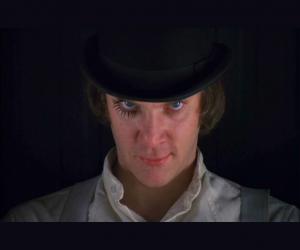 Contains some spoilers
Stanley Kubrick's brilliant adaptation of Anthony Burgess's terrific book is more than just a violent, disturbing, shocking science-fiction film. A Clockwork Orange is a critique on not only disturbed youth, but also the government who tries to take away their freedom of choices. Malcolm McDowell's performance is able to bring these critiques out even more with his transformation. At the beginning, his character of Alex performs horrific acts of "ultra-violence" and rape. He's unlikable and we wait for him to get what he deserves. Later, when a governmental brainwashing experiment takes away his ability to choose, we have a change of heart. A character who the audience hates at the beginning soon feels sorry for him. Alex's change is portrayed perfectly by McDowell, who goes from a sadistic meanie to just a young lad who can't defend himself.
The language of "nadsat" is transfered very well from the book with Kubrick keeping it intact and not distorting it. His use of classical music also works well with the film with the original score giving ample support to the scene. From the opening shot of Alex looking into the camera, to the end ("I was cured alright"), we're fascinated from start to finish. Despite the omission of the final chapter, Kubrick still keeps Burgess's original story, while adding his own feel as only he can.
Wednesday, October 24, 2007
Stanley Kubrick's Eyes Wide Shut (1999)
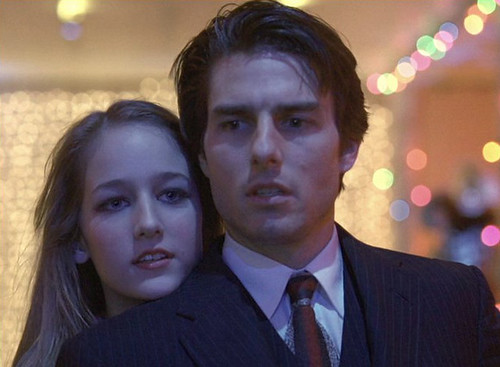 Stanley Kubrick's final film is such a perfect way to end such a brilliant a career. His use of visual imagery comes into perfect use here, as everything from the lighting to the cinematography is top-notch. Also of note is the music which almost feels like a heart beat, showing the viewer how hard Dr Hartford's heart is pumping at those moments. Tom Cruise's terrific performance also helps things, where he's able to make us see plenty by looking at his eyes. A man consumed by his wife's recent revelation, we see that it can lead him to do anything, including attending a masked orgy. Nicole Kidman isn't in the film as much as Cruise, but she provides great work, delivering monologue after monologue with perfection. Of course, who but Kubrick and his numerous takes could manage to do it? Eyes Wide Shut is not such a study on sex, but also a story that unravels at every turn, as every plot detail becomes unraveled for not such the viewer, but Dr Hartford as well.
Monday, October 22, 2007
Dreamgirls (2006)
 While other recent film musicals like The Producers, Chicago and Moulin Rouge lost none of their impact when brought to home video, Dreamgirls suffers when shown on a smaller medium. In the cinema, it felt like a full-blown Broadway musical with some terrific songs and star-making performances. On the small screen, all of these are greatly reduced and the flaws become more evident. The most notable comes from the songs. While the music is still catchy, the lyrics are too sappy and sound like the song writer did them in his sleep. Jennifer Hudson's award-winning performance also loses it's grandeur and goes from "surprisingly great" to "rather good."
However, there are still things that don't change in the transition. Eddie Murphy manages to show his dramatic side with a wonderful performance as a man whose life continues to be stepped down and soon goes down a bad path. The dance numbers still retain their energy and Bill Condon's direction still works very well, although his script doesn't. Finally, the art direction, costumes, editing, photography and lighting still hold their Broadway-style feel. The film is still very good, but unlike those previously mentioned musicals, just hasn't made a good translation from projection to digital video disc.
Stanley Kubrick's The Shining (1980)
 Stanley Kubrick's The Shining is more than just a horror film. The Shining is a psychological case study on the effects of isolation on the human mind. Kubrick and Jack Nicholson show on screen as the main character slowly descends into madness and soon sees ghosts, particularly a Mr Grady a former caretaker at the hotel, who presents with grotesque ideas of what to do with the family. Jack's son, Danny, also has an imaginary friend, who warns him of impending danger, unlike Grady who leads Jack into creating danger. In this, Kubrick provides an interest contrast: the innocence of childhood and the need to protect it and the madness of adulthood. It is quite possible that Danny could be very traumatised by the events at the Overlook Hotel and could one day end up like his father.
The creepy atmosphere that Kubrick brings to the set, adds to the film's scariness and watching the film again, we instantly recognise (in one scene where Jack and his wife are shown the hotel) locations that we will play a major role later on in the transition Jack goes through. The film's score, with it's twanging violins and eerie notes also make the film all the more creepy. If there's a sour note in the film, it's Shelley Duvall, playing Jack's wife. Throughout the whole film, it's obvious she's "acting" and not doing a good job at it either. This is made even more obvious in "bash your brains in" scene where she confronts Jack. On one end, we get an excellent performance from Nicholson, on the other is Duvall's embarrassing work. Yet, the suspense of the scene is still managed to be saved thanks to Kubrick's direction.
The Shining is a film that much like Kubrick's other works, is a fascinating study on human behavior, while also being a visual splendor and incredibly entertaining.
Sunday, October 21, 2007
Stanley Kubrick's 2001: A Space Odyssey (1968)
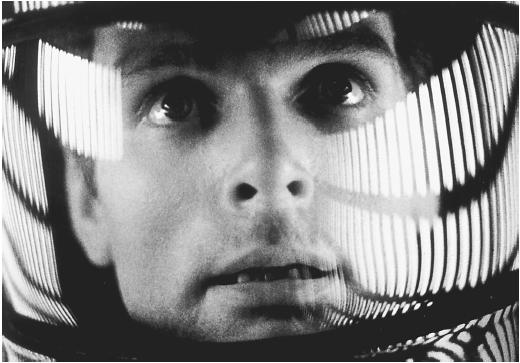 An absolute marvel of a motion picture, 2001: A Space Odyssey defines not on the science-fiction genre, but also cinema as a whole. Stanley Kubrick doesn't rush things and thus gives us a realistic view of space, free of speech and full of wonderment. His use of a classical score only adds even more to the calmness of these opening scenes in space. The film's imagery is absolutely enchanting to watch, with special effects that help the film rather than distract. Despite the film taking place six years ago, 2001 still holds up extremely well.
Yet, despite the film's optimism on space travel in the future, there is also a right amount of pessimism to make it work just right. Probably, the most interesting character in the whole film is the HAL 9000, the computer who suffers a mental breakdown on board. It shows an error that occurs when people try to give computers human feelings, as their control of everything leads them to harm rather than help their creators. Yet, even after his wrong-doings, HAL still displays his calm side. It is not surprise that each letter in HAL's name come right before the letters 'IBM.'
The whole idea of imagery is explored very well in the opening 'Dawn of Man' sequence when the apemen find the monolith. Soon afterwards, they develop a rather violent nature, Kubrick implying that violence is not something we know and do at birth but something we learn and are familiar later on. Similar to HAL, who starts off just knowing a solitary sound and then more information is put in him and like the apes, he learns how to harm and kill.
2001 is a film that can be talked about many times over (and it has) and that is another reason why it's such a masterpiece: The fact that it still holds up as a powerful and beautiful film today. And people are still talking about the ideas that Kubrick and Arthur C. Clarke implanted into the film.
Saturday, October 20, 2007
A relaxing character study and a fun family film.
Lost in Translation
 Lost in Translation has been accused as being boring and slow-moving by some people. I was one of those people, until I watched it again for the first time in four years.
Its slow pace is probably one of the film's best qualities. It's soothing and relaxing, like a nice spa and allows the viewer to get into the two protagonist's lives, as we see both of them suffering from similar problems. Bill Murray, in his best performance to date, gives Bob Harris a calmness as he tries to do with the new, unusual world he's in. There is also humour throughout that makes the character a fun fellow. Scarlett Johansson's performance is also of note as, like Murray, she gives the character a touching edge. Sofia Coppola's direction and screenplay also help in the above cases.
Lost in Translation can be best described as a light film, adrift with few cliches and a believable friendship between two individuals, who despite at different stations in life, are both experiencing similar epiphanies.
Mousehunt
 A fun family film, Mousehunt doesn't care about realism (as this film has barely any), but to get the viewer to laugh. And it certainly succeeds in that area. Nathan Lane and Lee Evans make a great team and while they don't put the combination of Lane and Matthew Broderick to shame, they still work very well together. The special effects used to create the mouse are also very well done, as they successfully mix real mice, puppets and CGI. Alan Silvestri's score is also one that adds the fun and darkness to the film, with both his main memorable theme and the sentimental music, too. This is a fun film that allows the viewer to escape reality for an hour and half.
Lost in Translation has been accused as being boring and slow-moving by some people. I was one of those people, until I watched it again for the first time in four years.Its slow pace is probably one of the film's best qualities. It's soothing and relaxing, like a nice spa and allows the viewer to get into the two protagonist's lives, as we see both of them suffering from similar problems. Bill Murray, in his best performance to date, gives Bob Harris a calmness as he tries to do with the new, unusual world he's in. There is also humour throughout that makes the character a fun fellow. Scarlett Johansson's performance is also of note as, like Murray, she gives the character a touching edge. Sofia Coppola's direction and screenplay also help in the above cases.
Lost in Translation can be best described as a light film, adrift with few cliches and a believable friendship between two individuals, who despite at different stations in life, are both experiencing similar epiphanies.
Mousehunt
A fun family film, Mousehunt doesn't care about realism (as this film has barely any), but to get the viewer to laugh. And it certainly succeeds in that area. Nathan Lane and Lee Evans make a great team and while they don't put the combination of Lane and Matthew Broderick to shame, they still work very well together. The special effects used to create the mouse are also very well done, as they successfully mix real mice, puppets and CGI. Alan Silvestri's score is also one that adds the fun and darkness to the film, with both his main memorable theme and the sentimental music, too. This is a fun film that allows the viewer to escape reality for an hour and half.
Subscribe to:
Posts (Atom)
Thank you for reading!
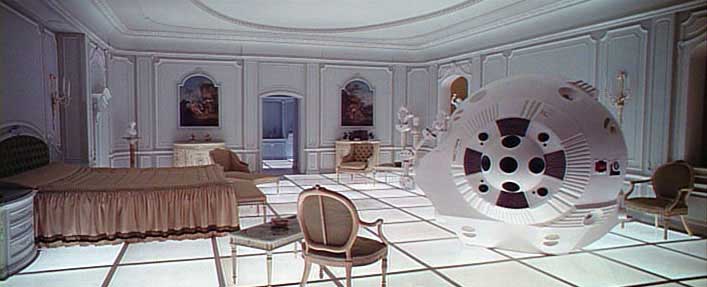
An image from 2001: A Space Odyssey