Just a bit of weekend fun.
Sunday, November 25, 2007

Friday, November 23, 2007
Walt Disney's Pinocchio (1940)

For seventy years, people of all demographics have been entertained and enchanted by the animated features brought out by the Disney studios. In an era when most animated films lack imagination and spirit, it's always nice to watch an earlier Disney film, whether it be one of their old classics or the works released during the early 90's renaissance. Most film historians claim that Snow White and Fantasia are the best films to come out of the beginning years and while I agree they are certainly historically important, they don't quite give me the joy provided by 1940's Pinocchio. Adapted from the Italian story, Disney may have changed things plenty during the writing progress, but the result is a magical and unforgettable experience that proves to not only be a fun romp, but also one of the best cautionary tales brought to the screen.
The story is, of course, familiar to everyone. A kindly, old woodcarver named Gepetto builds his own "little wooden boy" and soon enough the puppet is brought to life. However, before he can become a real boy, Pinocchio must prove himself worthy and with Jiminy Cricket as his conscious, he goes out into the real world, full of crooks and criminals. Naturally, Pinocchio the ever youthful puppet, lands into plenty of trouble, first becoming an actor for a scary marionette master and then being turned into a donkey. The audience, especially the young children watching, are absolutely enthralled by the whole production, but also scared by what is shown on screen. Unlike today's cartoons, that try to be as "friendly" as possible, Walt Disney wanted his films to leave an impact and Pinocchio certainly fits into that category. While the film enchants, it also provide plenty of frightening moments as well.
Quite possibly the scariest scene in the film is when on Pleasure Island, troublesome boys are transformed into donkeys and sent to the salt-mines. Pinocchio can quite possibly be called the greatest anti-cigar film ever made, just for the fact that it doesn't say that smoking is bad, it shows it (although, ironically, Disney himself was a massive smoker)! Another scene that really gets to young audiences is the part in which Pinocchio begins to lie up a storm and his nose grows, even producing a nest with birds at the end. It's enough to make children squirm in their seats and have them afraid to tell a lie again. One of the reasons these scenes are so successful in leading people to the right decision is the fact that Pinocchio is not just a little wooden boy, he represents the child in every one of us: naive and ready to set out into the world, but not fully aware of the dangers awaiting us.
Along with the donkey-transformation and nose-growing scenes, the most memorable aspect of Pinocchio is the music. "When You Wish Upon a Star" is Disney's anthem for a reason. It's not only beautiful, but also brings about what we all want: to wish for a better world, one without evil puppet masters, children taking bad habits and devilish foxes bringing people to the dark side. Finally, the most touching scene comes in the end, when Pinocchio seems like he might die, but his bravery to save Gepetto finally allows him to become a real boy. Even remembering that scene leads one to smile as it's not only Gepetto and Pinocchio's wish that is fulfilled, but ours as well. Everybody loves a happy ending and Pinocchio features the best of them all. Not only is it the best film made by Disney, but it's also their most optimistic. And that's why Pinocchio is such a classic.
Thursday, November 22, 2007
Propaganda Cartoon Week: Popeye in Seein' Red, White 'n' Blue (1943)
Joining in the war effort was also Popeye the spinach-eating sailor man. Seein' Red, White 'n' Blue starts out innocent enough with Bluto trying to injure himself to get out of the Navy, but continually failing. The propaganda doesn't really set in until Popeye crashes into a secret Japanese operation. As per typical in the cartoons at the time, the Japanese are portrayed as glasses-wearing, big-teethed dwarfs with extremely strong accents. Bluto, of course, seeing his friend being harmed, becomes patriotic and they both win the day (thanks to some spinach, of course). The cartoon ends with Bluto finally joining the Navy. The short is a patriotic film as it shows the Americans beating both Hitler and the Japanese powers. Not a particularly good short, but worth seeing for historical reasons.
Wednesday, November 21, 2007
Propaganda Cartoon Week: Private Snafu in: Spies (1943)
Directed by Chuck Jones and written by Dr. Seuss, Spies is just one of many shorts featuring Private Snafu, a character used for many propaganda World War II shorts. As is typical of other shorts at the time, the Japanese and the Germans are portrayed in a rather over-the-top manner, which actually leads to a lot of humour in the piece, as they try to figure out Snafu's top secret information. The film also shows the dangers of drinking too much alcohol and its use as a truth serum and thus leads to the dramatic ending of our hero going down to Hell. It's something different from the previous two shorts shown here, where the protagonists have a happy ending, as essentially this is also a cautionary tale.
Tuesday, November 20, 2007
Propaganda Cartoon Week: Der Fuhrer's Face (1942)
Walt Disney won an Academy Award for this short film, aimed at ribbing the slave-like tactics of the Nazi Party. Nowadays, this type of cartoon would never be made and at the time, the idea of Donald Duck being a Nazi must have caused some commotion as well. This is quite possibly the only piece of animation where you will see somebody like Donald shout "Heil Hitler!" continuous times. Yet, in the film's ending, when Donald hugs the Statue of Liberty, we see the short's true intentions: patriotism. Disney made not only an anti-Hitler film, but also a pro-American film and it works, especially when comparing the light feel of the ending with the nightmarish tones of the rest of the short.
Monday, November 19, 2007
Propaganda Cartoon Week: Wolf Blitz (1942)
Just thought I'd post something different. In the first film as part of Propaganda Cartoon Week, we look at Tex Avery's 1942 film Wolf Blitz. This is a very clever cartoon made to sell war bonds. It puts one of Tex Avery's most famous characters, The Wolf, and casts as an obvious parody of Adolf Hitler. Despite being obvious propaganda, Wolf Blitz succeeds to its hilarity and how it isn't afraid to make fun of a monster, unlike today's cartoons which are completely watered down (save for, of course, South Park). Definitely worth seeing, not only as an historical anecdote but also for a very enjoyable ten minutes.
Friday, November 16, 2007
DVD Review: A Clockwork Orange (1971) - Two Disc Special Edition
 Stanley Kubrick was a filmmaker who continually tried to both shock and amaze his audience, but most importantly he wanted people to come back again and again to unlock the layers of secrets hidden beneath his films. Plenty has been told regarding the impact of his A Clockwork Orange upon its original release, yet even looking at the film in it's own terms, it's easy to see why it's regarded as such a masterpiece. Kubrick adapted Anthony Burgess's equally brilliant book rather faithfully, but still giving the film his own mark. His films have been criticised for being cold and heartless, yet it's almost necessary for A Clockwork Orange to be filmed in such a style. Kubrick portrays his near-future as bleak and lacking the Utopian feel that most science-fiction writers were predicting. Reading the headlines in today's newspaper, the futuristic world depicted in A Clockwork Orange has unfortunately come true. This goes both for the portrayal of youthful aggression as well as the government's attempts to rid the world of it.
Teenage violence at its worst is personified in the lead character of A Clockwork Orange, Alex DeLarge (Malcolm McDowell). Alex is a parent's worst nightmare: He is cruel, violent, cold-blooded, but filled with intelligence, which he unfortunately does not put to better use. Alex romps around town with his gang of "droogs", raping and hurting innocent individuals just for the fun of it. One of the most disturbing (of many) sequences in the film is the scene in which is rapes a writer's wife while dancing and skipping along to "Singin' in the Rain." A seemingly innocent song about love is used in a means completely the opposite of its original intention, thus why it's such a disturbing part of the film. What's even worse is Alex knows that what he is doing is wrong, but his lack of conscience causes him to not care what society thinks of him and his ideas of fun. Kubrick's uncanny ability to seemingly combine beautiful classical music to a montage of horrifying comes into play in A Clockwork Orange, with Alex's admiration towards the works of "Ludwig van." Beethoven Ninth Symphony is turned from a wonderful piece of music to something particularly saddening as we learn how much this sadistic rapist obsesses over it and "As I slooshied, I knew such lovely pictures!" These so-called "lovely pictures" which contain such R-rated material as rape, violence and blood pouring out of Alex's fangs would probably scare Beethoven due to the way Kubrick so perfectly edits the images together.
Yet, there comes an interesting turn-around when Alex is arrested and sent to prison. Soon afterwards, the tone of the film completely changes as Alex begins to play nice and the film becomes far less disturbing and chaotic than the first act was. Alex wants to get back out into the world as quickly as possible and when he hears of a technique that will help him do so, he jumps to the chance. He is soon put in the Ludovico Technique, involving him being strapped to a chair, his eyes made un-shutable and forced to watch horrible acts of violence on a cinema screen. When Alex's beloved Ninth Symphony begins playing over images of Adolf Hitler and the Nazi Party, it is then that the effects take hold. Even Alex of all people realises that he is an amateur compared to the atrocities the Nazis performed during the Holocaust. This leads to an effect more cruel than the Technique's creators possibly imagined: Not only is Alex drained of violence, but also of his love of fabulous music. Maybe Beethoven heaves a sigh of relief, but us the viewer is oddly starting to feel sorry for Alex. He may be unable to commit violent acts, but he is also unable to choose whether he wants to or not.
Stanley Kubrick launches on these themes perfectly as only he can. Other filmmakers would probably none too subtly through these into the viewer's face, but not Kubrick. Like many of his other films, he allows to slowly tear apart the film throughout multiple viewings and even let us interpret the film's views ourselves without him interfering. He just sits, stroking his beard and thinking "yes, that seems about right. What else do you have to say regarding the film?" Malcolm McDowell's performance also brings us into Alex's world, carefully pronouncing each word that Burgess created for his book so as not to make any mistake. Each subsequent viewing, we learn a new meaning for "nadsat" and see that it is more than just the way Alex communicates, but also a part of his rebellion against the world he tolerates so much of. Stanley Kubrick not only created a masterpiece worthy of plenty of conversation, but also a look at our world currently operates and ways we can resolve these problems without the need of brainwashing techniques.
For this new edition of A Clockwork Orange, Warner Brothers has finally given the film the treatment it fully deserves on DVD, by affording it two sublime discs. The transfer is nice and sharp, with the images looking almost perfect. Meanwhile, the audio is also give a nice boost, particularly in the music-filled scenes, where Beethoven's music is even more clear than before, as are the dialogue between characters and sound effects. On the first disc, in addition to the fast-paced, almost seizure inducing theatrical trailer, is an audio commentary with Malcolm McDowell and film historian Nick Redman. McDowell is always fascinating to listen to and he provides an extremely informative chat on the film with Redman acting as a very good moderator. The second disc begins with a Channel 4 documentary on the controversy surrounding the film's release, with plenty of attention given towards the reaction in England, Kubrick's home for many years. While most of the information provided may not be new to fans who have already read plenty on the reaction towards the film, but they're still some interesting comments in the show to make it a very worthwhile watch.
A second documentary on A Clockwork Orange is provided regarding the film's influence on filmmakers, particularly people like Steven Spielberg, Sydney Pollack and George Lucas. There are also some factoids on the shooting of the film and Kubrick himself. It's yet another great addition to the disc. Finally, the set concludes with a documentary called O Lucky Malcolm!, that looks at the career of the film's lead actor Malcolm McDowell. Running about an hour and a half, the film takes a bit of a look at Clockwork Orange, but it also gives plenty of substantial information regarding his other roles, particularly his frequent collaborations with Lindsay Anderson and his time-travel film Time After Time. While it may have been nice to see more regarding his roles in the 80's and 90's, it still provides plenty of interesting comments on McDowell, the most interesting coming from his family and even himself. This documentary ends the disc very well.
A Clockwork Orange stands as one of Stanley Kubrick's masterpieces and Warner's new two-disc set provides enough good new material and a wonderful new transfer to make it a worthwhile purchase for fans of the film. This disc comes highly recommended.
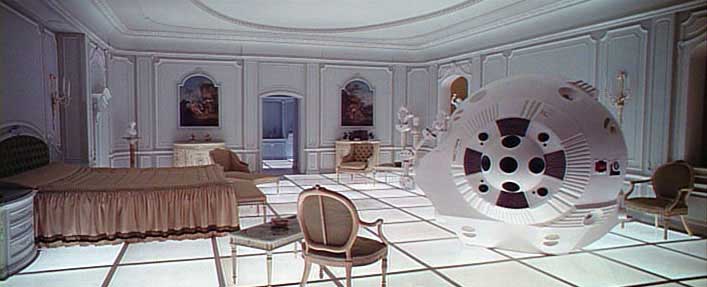
Note: The film can also be purchased with the new Stanley Kubrick Directors Series box-set, which also has two-disc editions of 2001: A Space Odyssey, The Shining and Eyes Wide Shut, as well as singles discs of Full Metal Jacket and the documentary Stanley Kubrick: A Life in Pictures. If you're a Kubrick fan, the box-set is definitely worth getting, especially for its bargain price of about 60 to 80 dollars.
Wednesday, November 14, 2007
One of cinema's greats: Citizen Kane (1941), directed by Orson Welles
 Has a film ever been more praised and loved by film critics than Citizen Kane? Some people will say The Godfather or Casablanca hold that title, but I think it's Citizen Kane. The praise is certainly deserved, because this is certainly is one of the greatest motion pictures of all-time. Much more fascinating is the fact that it was almost never released and close to be destroyed. Welles had already created controversy with his "War of the Worlds" broadcast that shocked America, but that was nothing compared to what erupt thanks to Citizen Kane. Newspaper tycoon William Randolph Hearst believed that the film painted an unflattering image of him and was determined to bury the film, along with Welles. Due to Hearst's power of the press and radio waves, the film was barely advertised and flopped on its initial release. It would also lose the Best Picture Oscar to John Ford's sentimental How Green Was My Valley (considered by many to be the Academy's biggest mistake ever). Kane would disappear and only after both the careers of Hearst and Welles fell did it start to gain an audience upon numerous re-releases from the 1950's onward. It was praised by critics as a masterpiece and Welles was put alongside Chaplin and Ford as one of cinema's greatest artists. More and more acclaim is given to Citizen Kane each day and rightfully so.
Millionaire tycoon Charles Foster Kane (Orson Welles) dies one night in his bed at his giant castle, Xanadu with his very last word, "Rosebud." A reporter (William Alland) working on a news reel about Kane is soon asked by his boss to investigate the importance of the word. So, he begins to interview previous colleagues of the newspaper runner, which leads to various flashbacks of his life. After his mother becomes rich, she sends Charles away with a bank owner and he soon grows into a prosperous man, who decides that "it would be fun to run a newspaper." He gains control of The Inquirer, which soon blossoms into a major enterprise. He soon marries the president's daughter and runs for senator. After that breaks off, he meets a young woman who he wants to become a successful singer, but she is not able to hold a tune. Yet, through all of this, does the reporter ever find out what "Rosebud" means?
Citizen Kane has been looked into and analysed by many critics (including one providing a commentary for the DVD) and almost everybody has a different interpretation. I, for one, view it as a story of a man who despite gaining a lot of money, never really became happy and that one word is Kane realising that his death is probably the best thing to have ever happened to him. Kane becomes so insanely wealthy and successful, that he forgets what life is all about, which explains why he just melts away in Xanadu for all the years after his second wife's divorce. Kane may not be the kindest gentleman, but he certainly is fascinating, which is probably what adds to the everlasting appeal of Citizen Kane. Orson Welles set out to tell the story of one man and made a masterpiece and a classic motion picture history. His performance, direction and screenplay are all perfect in every way. His supporting players, which he brought to Hollywood with him from the Mercury Theatre are all impressive as well. Gregg Toland, the cinematographer, also deserves heaps of praise for his brilliant camera work and lighting effects.
Sunday, November 11, 2007
The latest animated charmer from DreamWorks Animation is...
 There's something about animated insects that seems to attract popular big-city comedians for some reason. New York's Woody Allen lent his familiar voice to Antz with slightly embarrassing results. A couple of months later, Mark Foley, from Toronto's "Kids in the Hall" troupe, played the lead in Pixar's A Bug's Life, succeeding rather well. However, unlike Allen and Foley, both of whom were hired after story completion, DreamWorks' Bee Movie was sitcom star Jerry Seinfeld's project from the very beginning. The film features his usual charm and wit and as is able to succeed without going through the "off-colour adult humour" route that seem to be plague modern animated productions.
Like other animated films about talking bugs, Bee Movie portrays its title heroes as human-like, showing a close-up at the hive and comparing the two different species rather comically. Bees are shown as using honey for hygiene, flying as the equivalent of running and graduating university in a grand total of three days. Barry B. Benson (Jerry Seinfeld), however, is less than enthralled about having the same job for the rest of his life, despite the excitement of his best friend Adam (Matthew Broderick). Barry decides to fly out of the hive and explore the outside world. After being saved by a human florist (Renee Zellweger), he befriends her and soon finds out that humans have been eating honey for decades. In response, Barry sues the human race and the honey factories are shut down. Unfortunately, things don't become as cheery as Barry had planned.
To put it simply, Barry is essentially Jerry Seinfeld in bee form. He constantly tells jokes wondering the reason for certain things and he plays off other characters very well. Zellweger gives an almost Elaine Benes vibe in her performance as the florist and this leads to some humourous moments between her and Barry, creating a relationship almost akin to that of Kermit the Frog and Miss Piggy. The other actors do rather well, too. Matthew Broderick once again plays the straight man and voice-of-reason with a calm feel, while John Goodman puts on a humourous Sourthern accent for his role as an insect-hating lawyer. Seinfeld also rounds up celebrity cameos from Ray Liotta (who is able to lampoon himself with a little help from the animators), Larry King and Sting. Chris Rock also provides the film's funniest line as a blood-starved mosquito.
Bee Movie also proves to be a rather winning social commentary on the legal system and how suing shouldn't necessarily be the answer to everything. There are also some funny jokes on inter-racial marriage and airport regulations. That's for the adults. For the younglings, this film is funny for them as well, mixing colourful animation with some physical comedy and roller-coaster-ride sequences. Harry Gregson-Williams' bouncy score also adds to the charisma and fun of the production. Insect biologists will probably cry fowl regarding the film's inaccuracies, like how it shows both male and female bees making honey (although, like the human world, both genders are probably equal in the workplace) as well as forgetting the fact that only female mosquitoes suck blood. However, the film is so entertaining and so funny, that these can be overlooked. Overall, Seinfeld has made Bee Movie just as intelligent and funny as even Pixar's productions.An early look at what Bee Movie could have been...
Sam Raimi's Evil Dead II (1987)
 Ridiculous, over-the-top and just plain silly, Evil Dead II is a fun B-movie experience that doesn't take itself too seriously or overstay its welcome. Sam Raimi creates a creepy, yet hilarious atmosphere with gore splattering all over the place like an out-of-control fountain. Bruce Campbell is, of course, the highlight giving a very good performance in the lead, overshadowing the rather one-dimensional supporting cast. The makeup and stop-motion effects are very well done and all add to the fun as well. This is an unusual film but still a bucket load of fun.
Favourite scene: A whole sequence where Campbell has a fight scene with his possessed hand, which feels a lot like Tom & Jerry with the violence completely amped up.
Subscribe to:
Posts (Atom)
Thank you for reading!
An image from 2001: A Space Odyssey