Warning: The following review of Eyes Wide Shut contains spoilers for the film.
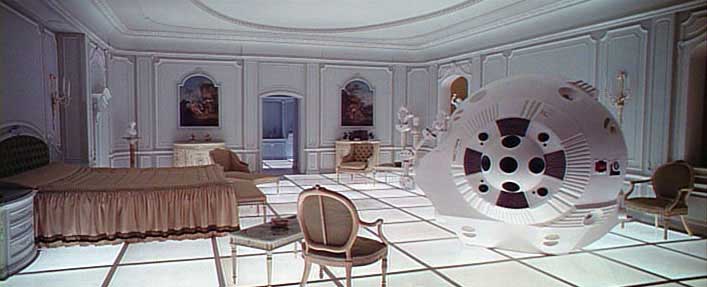
Stanley Kubrick began his career as a teenage photographer and finished it as a maverick filmmaker. The transition from a young Brooklyn kid to one of the greatest directors in the history of film is an impressive one and rather evident in plenty of his films. Kubrick always knew how to frame a shot, ever since he began taking pictures as a boy. In each of his films, the camera was placed perfectly, creating superb picture after picture. Kubrick was not just a filmmaker, he was an artist. Many years from now, his films will be looked at the same way the paint strokes of Goya or the music of Mozart are analysed today. To cap off his incredibly consistent career, the reclusive Kubrick made his first film in twelve years and one of his best. Eyes Wide Shut is a film that is hard to classify into one genre, as its unique cinematic experience brings something different never experienced before. Kubrick would continually re-invent film with such masterpieces like Dr. Strangelove, A Clockwork Orange and most importantly 2001: A Space Odyssey, his magnum opus. Eyes Wide Shut may unfortunately be Kubrick's final film, but thankfully he left the world with a bang and not a whimper.
Bill Harford (Tom Cruise) is a New York doctor whose night of drugged sex goes differently than planned when his wife Alice (Nicole Kidman) reveals that she almost had an affair. Filed with jealousy, he wanders through the city in a sexual odyssey. He encounters street thugs, a kindly prostitute and finally an old pianist friend, who reveals a little too much about his next recital. Moving down to the seedy underworld of the Illuminati, Harford finds himself in the middle of an orgy where the rich come to watch as young maidens de-flower themselves in front of everyone. After the scare of his life, the curious doctor decides to investigate the meaning behind the night's events and like the viewer, he is not sure whether or not he should believe what is given to him.
Like all of Stanley Kubrick's films, Eyes Wide Shut is a piece of work that gets better with multiple viewings and more is noticed with each look. Not surprisingly, there is still plenty left un-explained and like a detective story, the viewer has to unravel clues much like the main protagonist does. Yet, before Harford turns into Sherlock Holmes, he represents a modern version of Odysseus from Homer's The Odyssey. Throughout the film, he is confronted by individuals wishing to give him sexual pleasure, yet he avoids them much like Odysseus and his encounter with the sirens. Similar to that character, turning down the various characters turned out to be fortunate for him. During his dreamy walk through New York, Harford encounters a prostitute who he kisses but eventually does not sleep with. The next morning, he finds out that she is HIV-positive. His decision to not have sex with her turns out to be a good one as he does not receive the deadly disease. He also turns down the offer of a patient of his and despite his sexuality being questioned by a group of rowdy teenagers (thus leading to the encounter with the prostitute), he still does not cheat on his wife. Her words may have caused jealousy, yet he actually ends up being a more noble character than Alice. With Harford as his main protagonist, Kubrick actually brought upon a rare personality that for him was un-explored. Harford has his flaws, but he is actually the most sane character of the film and the least demonic. Tom Cruise's performance also helps the audience be with the character as goes on his journey. He gives life to Harford and fleshes him out into a human being with feelings and emotions. Cruise is an accomplished actor and he hits the right keys, not going over-the-top and not being too drone-like. It is a subtle performance from one of Hollywood's biggest stars.
Stanley Kubrick would always give his female leads as much as heart-ache as his lead male actors. Most of the time he managed to bring forth a great performance as evidenced by Marisa Berenson in Barry Lyndon and Sue Lyon in Lolita. In the case of Shelley Duvall in The Shining, there was the opposite effect. Thankfully, Nicole Kidman's work in Eyes Wide Shut proves to be an outstanding performance, bringing forth a character whose dark side is shown even when she's just glancing towards the camera (a frequent Kubrick trademark). Her character is not on screen as much as Cruise is, but when she does show up on camera, she excels. Most of Alice's dialogue consists of monologues, each showing the character's rough edges easily. Kidman perfectly brings layer upon layer on the character. Even in Harford's frequent fantasies, there is something sinister and careless told about her. The most fascinating scene of Kidman's comes when she is high on drugs and reveals her sensual theories to her husband. The combination of Cruise and Kidman starts the scene, but she soon takes over silencing not just Harford but the viewer as well.
Another possibly sinister character with something to hide is done very well with Sydney Pollack. As soon as he is shown in a bathroom with an over-dosed and naked girl, the audience knows that this man has a couple of skeletons in his closet. When he reveals to Harford some information regarding both the cult and the naked girl, both Harford and the viewer aren't quite sure whether to trust him or not. It's not just the screenplay that leads us to believe this, but Pollack's performance as well. That final scene either produces plenty of information or makes people more confused about the past two hours than they were before. He says the whole orgy cult was done to scare Harford, yet why would they go through all the trouble to do all that? Harford is suspicious and so are we.
Kubrick only follows that sequence up with a final confrontation between Bill and Alice. In these culminating scenes, Alice states that "only as sure as I am that the reality of one night, let alone that of a whole lifetime, can ever be the whole truth." All of this goes back to the film's title. Are Harford's eyes wide shut? Or could it be Alice or even the pianist? How about Sydney Pollack's character? For all we know, it could even be Kubrick himself as the director certainly did work in mysterious ways. It is rumoured that long-gone rapper Tupac hinted in his songs about his eventual death. Could it be that Kubrick wanted to give us one last hint about him in this film? It is possible that we will never know. Yet, he left behind a treasury of classics and Eyes Wide Shut most certainly ranks among his best.
Now, Eyes Wide Shut has finally gotten the two-disc special edition treatment it so rightfully deserves. The transfer is terrific and the collection of extras, both new and old, is great. The first extra, on Disc Two, is a documentary called The Last Movie: Stanley Kubrick and Eyes Wide Shut, which takes a look at Kubrick's final years, including the production of Eyes Wide Shut. It's an interesting featurette, although I would have liked to see more information on the title film. There's yet another featurette right afterwords that looks at the films that Kubrick almost made, most well known of which were his Napoleon and Holocaust projects. It's the best supplement on the set and does an interesting job at showing the way Kubrick worked. This is followed by his speech from when the famed filmmaker won the Honorary Director's Guild award shortly before his death. Kubrick never did many public filmed interviews, so this is a treat to watch.
Finally, the disc ends with some extras taken from the previous DVD release of the film. There is an interview gallery consisting of conversations from Cruise, Kidman and Kubrick's long-time friend, Steven Spielberg. Spielberg provides the most interesting discussion as he talks about the power of Kubrick's films as well as his friendship with the man. Cruise and Kidman also provide a couple of interesting comments, but it's mostly just praise (and since they were recorded before their divorce, their discussions are also rather dated). The last extras are a series of trailers for Eyes Wide Shut. Probably what will please all North American Kubrick fans is the first Region 1 release of the uncut version of Eyes Wide Shut, never before released in that part of the world. This is the way the film was intended to be seen and thankfully newcomers of the films will only be able to watch this version.
Stanley Kubrick's Eyes Wide Shut is a phenomenal motion picture and one that has incredibly re-watchability value as each viewing brings forth something new. Like Kubrick's other films, this is a art work and one that can be theorised for many years. This DVD is definitely worth adding to any collection.
Note: The film can also be purchased with the new Stanley Kubrick Directors Series box-set, which also has two-disc editions of 2001: A Space Odyssey, The Shining and A Clockwork Orange, as well as single discs of Full Metal Jacket and the documentary Stanley Kubrick: A Life in Pictures. If you're a Kubrick fan, the box-set is definitely worth getting, especially for its bargain price of about 60 to 80 dollars.