Wednesday, October 17, 2007

Godard's Week End (1967) and Tarantino's Kill Bill Vol, 1 (2003)

Quite a departure from my first Jean-Luc Godard film, Bande a part, Week End is quite an odd, little piece of work. The film does have plenty to admire. The film knows that it is obnoxious and almost self-indulgent and it is not afraid to say it, which is actually one of the reasons it starts out fairly well. One long scene which just simply shows a rather large traffic jam, left me surprisingly more enthralled than bored for some reason. The way Godard directed the sequence really made me want to see how it would progress.

Around the one-hour mark is when the film starts to run into problems. Suddenly, the film loses the self-knowing feeling that made the first part rather good. Godard packs a whole bunch of ideas that ultimately goes nowhere and we're left in the end with a messy film.


Certainly one of the most interesting things that can be said about Quentin Tarantino's Kill Bill is that is probably his most feel-good film. Whether it's the fact that he makes us feel for the lead character or Uma Thurman's rather emotional performance, we have a smile on our face throughout most of the running time. Any reason is that the film doesn't take itself too seriously. The violence and blood is so over-the-top and comically done, that instead of being shocked, we laugh. Tarantino's ability to write great dialogue also adds to the fun of the film. In fact, due to my recent watchings of East Asian films, I appreciate the film even more for its homage to those types of films. And that includes liking Chiaki Kuriyama's performance even more, due to my recent viewing of her work in Battle Royale. It's a fun film that despite its open ending works very well.

The Kid (1921)


Charles Chaplin is, in my opinion, the funniest comedian and the greatest director who ever lived. From his quiet days of trying to cross a street in Venice, California to poking fun at the most evil man in the world, he was a brilliant genius. However, he had his low points too. His first child died three days after he was bored and that hurt Chaplin very much. That terrible incident would later become the inspiration to make one of his most touching films, The Kid which would go on to become one of his biggest hits and make Jackie Coogan one of the first Hollywood child stars.

After a poor mother (Edna Purviance) gives birth to an un-wanted baby (Baby Hathaway), she puts him in a car. Soon, the car is stolen by two criminals who later see the baby and leave him on ground. The Tramp (Charles Chaplin) later appears and finds the baby. At first, he wants to get rid of him, but then changes his mind and decides to raise him as his own. Five Years later, the boy's mother has now become a successful opera singer, but still can't keep her lost child out of her mind. Meanwhile, the Kid (Jackie Coogan) has now become a partner-in-crime with the Tramp. However, when the boy then becomes sick, the authorities take him away. This later leads to a very sad and beautiful ending which we all know Chaplin was famous for.

Charlie Chaplin's most personal feature, The Kid is a wonderfully directed comedy that is a must-see for anyone of any age who wants to check out Chaplin for the first time. Charlie may have gotten top billing, but it's Jackie Coogan's brilliant work as the Kid that should be watched. Coogan gives the best performance ever by an child actor that I have seen. The gags are wonderfully constructed, especially in scenes with the Tramp and the Kid together.

Tuesday, October 16, 2007

Hana-bi (1997)


Most people will refer to Hana-bi as a boring film and I understand where they're coming from, but I felt this was more a relaxing film than a boring one. The visual qualities of the cinematography and Joe Hisaishi's great score allows for a calm, soothing experience like drinking a fine cup of tea. Beat Takashi's performance is also one of praise as he gives a subtle, nuanced performance and very different from the last role I saw him give in Battle Royale. He reminded me quite a bit like Marcello
Mastroanni. In fact, I would not be surprised if he was inspired by Fellini's 8 1/2, as the influence is certainly there. There were many times when I felt the film could have certainly hurried up, but I was still quite a bit impressed with the film.

City Lights (1931)

City Lights

I am not ashamed to admit that I cried during City Lights, both of emotion and of laughter. It's a heartwarming story and it's easy to see why the American Film Institute chose this film to represent the Tramp when they put on their list of greatest screen heroes. Chaplin is wonderful and has great chemistry with Cherrill, even though the two didn't exactly have the best off-screen relationship. The scenes with the millionaire provide the humour very well with both actors playing off each incredibly. However, what really sells the film is the ending, which in my opinion is the best finale in all of cinema history. It seriously is a knockout.

Monday, October 15, 2007

Fritz Lang Double Bill

You Only Live Once
A rather average film from German Expressionist Fritz Lang, You Only Live Once suffers because it just runs too long and adds an additional plot that goes nowhere. However, this is more the fault of the screenwriter than Lang, who uses cinematography and lighting as only somebody with such a background could (see image above for example). The actors are rather good and there are moments of suspense, but it's an overall disappointing film.

Scarlet Street

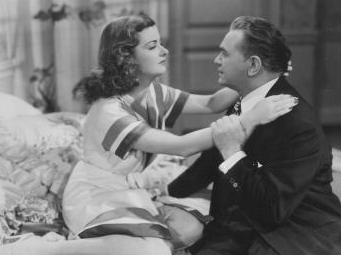
Fairing much better is Lang's Scarlett Street. A very entertaining film with Edward G Robinson giving an excellent performance as a tormented man who might soon go too far. The script is both funny and suspenseful and has you interested from start to finish. There is a long period of time when Robinson is not on-screen, but that doesn't diminish those scenes. Certainly a classic film to see.

Mulholland Drive (2001)

David Lynch is renowned for his rather odd films. Mulholland Drive is the second of his films I've seen and the first of his so-called odd films. It certainly fits the bill. There is a recognisable story hidden in the film somewhere, but it's the secondary story that proves the most fascinating. Justin Thoreaux provides the film's best performance as a director, who might even be inspired by Lynch himself. His story also proves more interesting than the main one with Naomi Watts giving a surprisingly flat performance. However, as the third act arrives, she improves quite a bit, which begs the question: Was what we just saw a dream or is what we're watching now a dream. It comes so abruptly that I wouldn't be surprised that were the case. However, I would not be surprised if that wasn't.

The film does suffer from problems of running too long and taking a while of getting to the point Lynch is trying to make. As stated before, Watts is rather poor, speaking her lines like a secondary school student. Although, she does improve slightly in the third act. Ann Herring (pictured right) is also rather poor, but unlike Watts, she doesn't improve. Lynch's script also proves flat in parts, but as the film concludes, the film feels more worthwhile as a whole. Although, that's not to say I'm used to Lynch's oddness, because I'm certainly not.

Sunday, October 14, 2007

Fulltime Killer (2001)

A high-energy Chinese film, Fulltime Killer features Andy Lau in yet another great performance. There are times when the film gets a tad bit ridiculous (and oddly enough, one such moment was inspired by Terminator 2), but the action is well directed. There are the typical melodramatic montages that typically plague Chinese films, but there as common in this film as they were in, say, Infernal Affairs.

Overall, this is a fun film with quite an ending that sure comes out of left field.

...And now the trailer for your enjoyment.


Thank you for reading!

Thank you for reading!
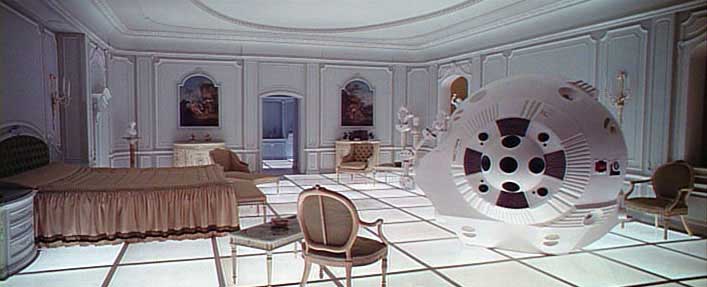
An image from 2001: A Space Odyssey